





Ask what a villa costs per square meter in Bali and you’ll get a number. Ask two agents the same question about the same area and you’ll often get two numbers that are far apart. Neither is wrong. They’re usually measuring different things.
Price per square meter is a useful tool, but only when it’s applied to genuinely comparable properties. This article covers what the metric actually measures, what moves it, and how to normalize two villas so the comparison means something.
What “Price Per Square Meter” Actually Measures
Land, building, and are
Bali listings quote three different square-meter figures, and they aren’t interchangeable. Price per land m² divides the asking price by the plot. Price per building m² divides it by the constructed area. Price per are uses the local unit of 100 m² and is most common in land listings.
A villa on a 300 m² plot with 200 m² of building has a land rate 50% higher than its building rate, from the same asking price. Before comparing any two villas, confirm which denominator each figure uses. It’s the single most common reason two quoted rates look irreconcilable.
The 2026 baseline
According to REID data in Bali Home Immo's H1 2026 market review, the market-wide average sits at USD 1,975 per square meter, with the median villa at IDR 5.27 billion (around USD 316K). Villas average 241 m² of built area. Apartments average 74 m² and carry a higher rate at USD 3,060 per m², a useful reminder that a higher per-meter figure often means a smaller, denser product rather than a better one.
Converted at the rate implied by that median, roughly IDR 16,700 to the dollar, the market average works out near IDR 33 million per square meter and the apartment figure near IDR 51 million. Treat it as an island-wide reference point rather than a benchmark any individual villa should match. The spread around it is wide, and the rest of this article is about what creates the spread.
Location Sets the Floor
Micro-location does more work than area names
Canggu versus Ubud is the comparison most buyers start with, but the larger gaps sit inside areas rather than between them, and which streets command a premium depends on how the property will be used.
Short-term rental value concentrates on the walkable strips. Batu Bolong street, Oberoi in Seminyak, Pererenan’s beach road, and the Berawa triangle between Pasar Semat, Cafe Del Mar and Jalan Pemelisan Agung. A guest staying a week pays to walk out of the villa and be somewhere worth being within five minutes, and will accept a tighter plot and closer neighbours to get it.
Long-term rental value sits elsewhere. Umalas, Padonan, Tumbak Bayuh, Semer, the residential pockets above Sunset Road, and the Seseh and Cemagi beachfronts. Someone living in a house for a year wants space, parking and quiet, and will happily trade a five-minute walk for a larger property at a better rate per meter.
So the same street can price strongly for one model and ordinarily for the other. Price per square meter only means something once you know which market the property is being bought for.
Distance, position and access
Distance to the beach is the clearest single driver. Beachfront, walking distance, near-beach and inland stock should be grouped separately before any averaging happens. Position matters alongside distance, so ocean view, rice-field outlook, riverside and cliffside each carry their own premium, as does road access. Main-road frontage with commercial potential prices differently from a plot reached by a narrow gang, and wide car access is worth real money at resale.
Scarcity in built-out areas
In mature areas like Batu Bolong, Petitenget and central Seminyak, the supply of remaining plots is limited. That scarcity alone supports a higher unit price, independent of what's built on the land. It's also why an established area can hold its rate while newer areas fluctuate more.
Tenure and the Number That Makes Villas Comparable
Land and Building Are Priced differently
Freehold and leasehold operate under different valuation frameworks, and leasehold carries a This one reverses most buyers’ expectations. Smaller plots consistently price higher per are than large ones. A compact walk-to-beach parcel can run several times the per-are rate of a 20, 50 or 100-are inland block.
The reason is straightforward. Small premium parcels are scarce and immediately usable. Large plots are bought for scale, subdivision or development, and the buyer pool is narrower. So a 25-are inland plot showing a far lower rate per are than a 5-are walk-to-beach plot is not the better-value purchase. They’re different products serving different buyers.
The rule worth stating plainly: a lower price per square meter does not automatically mean better value.
Tenure and the Number That Makes Villas Comparable
Freehold and leasehold are valued differently
Freehold and leasehold operate under different valuation frameworks, and leasehold carries a second variable on top: years remaining. REID recorded leasehold at 86.5% of villa transactions in H1 2026, so most comparisons in Bali are leasehold against leasehold, which makes lease length the decisive adjustment.
The lease-adjusted rate
Two identical villas, one with 15 years left and one with 35, are not comparable at face value. One calculation fixes it:
Price ÷ building m² ÷ years remaining = cost per square meter per year.
Run it on both properties and the comparison becomes meaningful. It’s also the figure to hold alongside expected rental income, since both are annual.
Zoning belongs here too. Land zoned for tourism or commercial use can support short-term rental operation and is valued accordingly, while purely residential zoning serves a different purpose. Two plots of equal size in the same village can sit in different zones.
Extension is part of the price
A lease with few years left often shows an attractive rate per square meter, and the extension is what decides whether that rate was genuinely cheap.
Extension terms sit in the lease agreement rather than in law, and they vary. Some agreements fix an extension price or a formula at signing. Others give a right to negotiate at renewal without setting a number, which means the eventual cost follows land values at that time rather than today’s. On a plot in an area where land has appreciated sharply, those are very different outcomes.
This is also where land rate and building rate separate. Extension is priced against the land, not against the house standing on it, so a villa on a small premium plot can face a higher extension cost than a larger villa inland, regardless of what either building is worth.
Two questions settle it on any leasehold purchase: what exactly does the agreement say about extension, and is the price fixed, formula-based or open. The answers belong in the comparison alongside the remaining years, and a notary should confirm them before anything is signed.
Specification: What the Build Itself Contributes
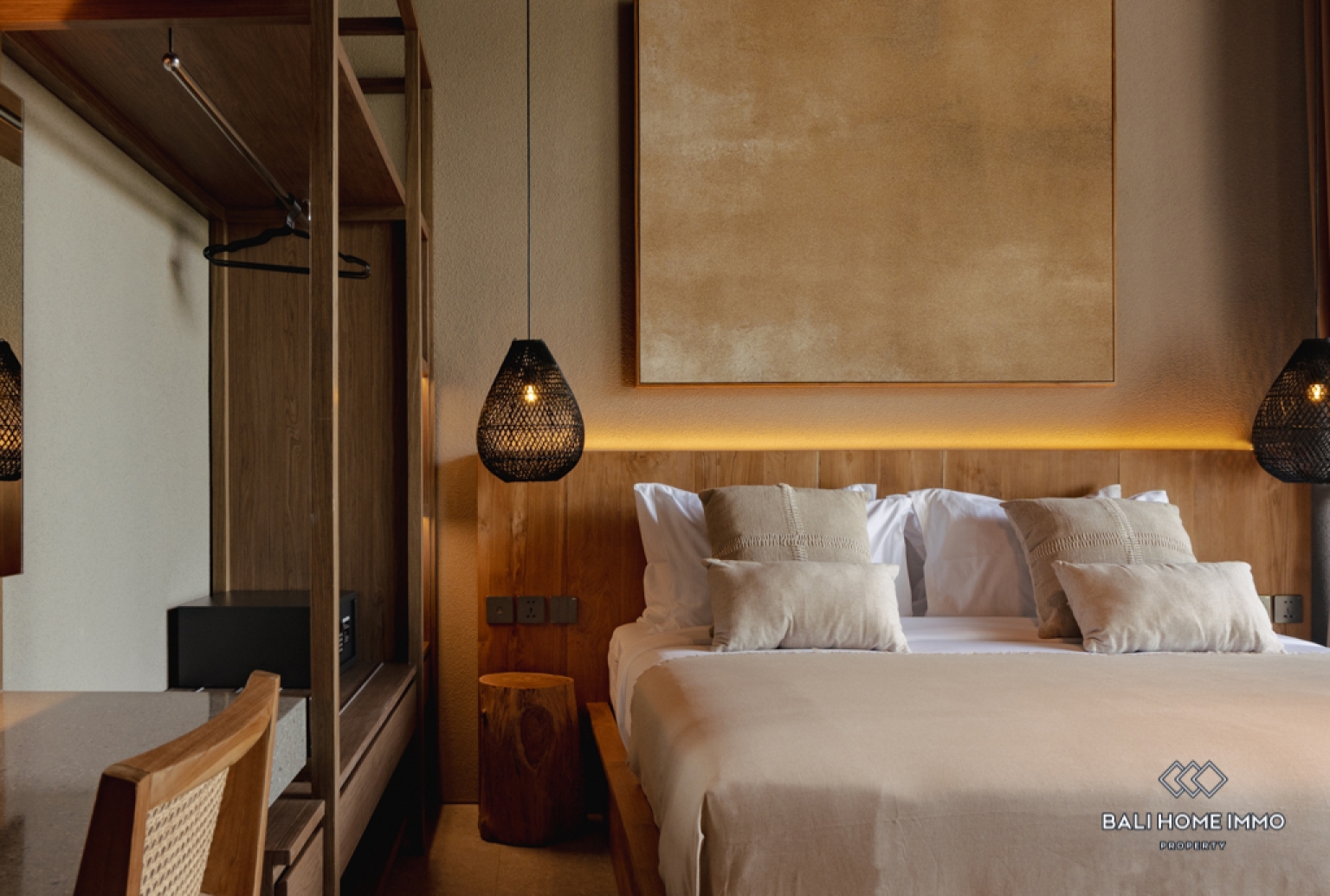
Construction cost forms the floor under any villa’s price. The figures below come from published Bali contractor and supplier rates collected in 2026, and they’re indicative ranges rather than quotes.
|
Specification tier |
Cost per built m² |
|
Standard – light block, ceramic tile, standard aluminium frames |
Rp 9–12 million |
|
Premium – natural stone or local marble, solid timber, tempered glass, pool |
Rp 13–18 million |
|
Eco-luxury – imported marble, teak, double glazing, smart home, full AC, mature landscaping |
Rp 19–28 million |
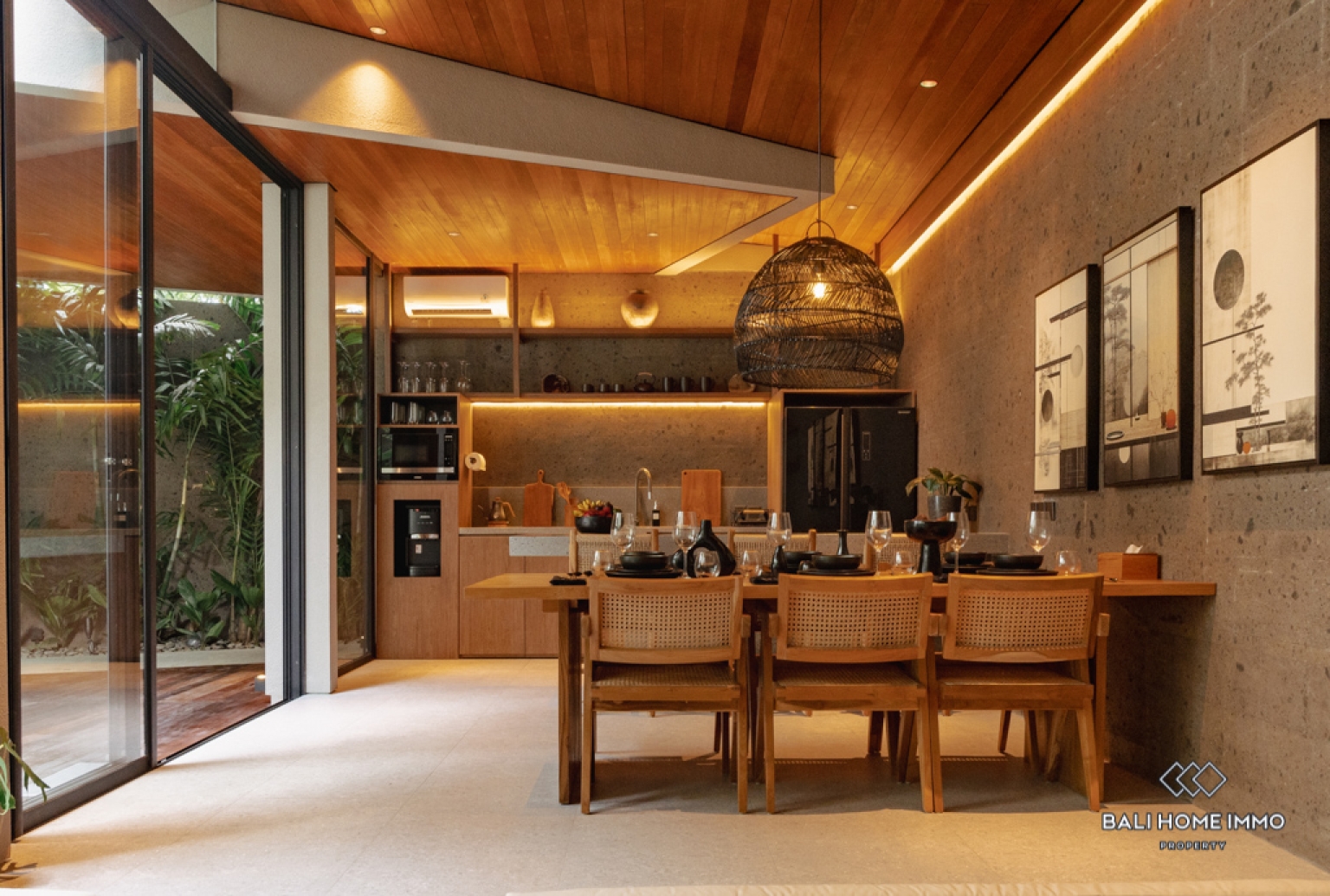
A few line items account for most of the gap between tiers. Alang-alang thatch roofing is installed in Bali at around Rp 350,000 per m², against considerably less for tile or shingle, and it carries a replacement cycle rather than being a one-off cost. Andesite wall cladding runs Rp 125,000–290,000 per m² in material plus Rp 275,000–350,000 in labour, where plaster and paint costs a fraction of that. Terrazzo flooring ranges from Rp 500,000 to Rp 1.5 million per m² depending on finish, and solid teak or merbau flooring sits between Rp 220,000 and Rp 700,000 per m².
Pools are a clean comparison. On a 4×5×1.5 m pool, an overflow system came in at Rp 183.7 million against Rp 162.1 million for a skimmer system, about 13% more.
Services deserve a look on any viewing. PLN electrical capacity decides whether a villa can comfortably run full air conditioning, a pool and future EV charging, and a new connection at 5,500 VA costs Rp 5.1 million against Rp 3.4 million at 3,500 VA. Water source, hot water method, wastewater treatment and air conditioning type follow the same pattern: modest amounts individually, meaningful in combination.
Using the Metric Well
Price per square meter works when it compares like with like. Before putting two figures side by side, confirm six things:
-
Which denominator each rate uses, land, building or are
-
Plot size, since small and large parcels price on different logic
-
Distance to the beach and road access
-
Years remaining on the lease
-
Whether furnishings are included in the quoted price
-
Which rental model the property suits, since that decides which micro-location commands the premium
Applied that way, it’s one of the more reliable tools a buyer has. Applied as a single island-wide number, it flattens exactly the differences that determine what a villa is worth.


