





Bringing your little fur baby into Indonesia involves microchipping, vaccinations, a rabies-antibody test, an import recommendation or permit, a government-endorsed health certificate, advance notification, and inspection by Indonesian Quarantine.
This guide covers privately owned dogs and cats arriving from overseas; requirements differ for birds, reptiles, primates, protected species, or commercial animals. Procedures also vary by country of origin, entry point, and current disease conditions, so Badan Karantina Indonesia's guidance should be the starting point, with the airline, origin-country vet authority, and Indonesian entry-point quarantine office consulted before booking anything.
Confirm the Import Is Possible
Establish the full route: departure country, transit countries, airline/flight, Indonesian arrival point, final destination, and whether the pet travels in cabin, as baggage, or as cargo. Each leg may carry separate requirements.
Check rabies status: Badan Karantina Indonesia requires that the animal not come from a country experiencing a rabies outbreak, along with an official health certificate, vaccination record, and proof of protective rabies antibodies. Don't rely on general "rabies-free" labels, confirm directly with the quarantine office at your intended entry point.
Confirm the entry point: Not every airport can process live-animal imports. The Ministry of Foreign Affairs handbook references Soekarno-Hatta International Airport for diplomatic personnel, but private importers should get written confirmation of their own entry point from the relevant quarantine office.
Veterinary Preparation
Start this process several months ahead.
-
Microchip: Implant an ISO 11784/11785-compliant chip (per commercial relocation guidance) before vaccination begins. The same number must appear on every subsequent document; vaccination booklet, rabies certificate, lab results, health certificate, import application, and airline paperwork.
-
Rabies vaccination: Requires a certificate showing the pet's details, microchip number, vaccination date, vaccine name/batch, validity period, and vet's credentials. Microchip first, vaccination second, so authorities can confirm the record matches the animal.
-
Standard vaccinations: Dogs need distemper, hepatitis, leptospirosis, and parvovirus; cats need feline viral rhinotracheitis, calicivirus, and panleukopenia (per PetRelocation, general guidance only; confirm current schedule with your quarantine office and vet authority).
-
Rabies-antibody titre test: A blood test confirming immune response. Indonesian Quarantine requires this but doesn't publish the threshold, timing, or approved labs on its public page. A commercial source cites 0.5 IU/ml as typical, but verify the accepted threshold, method, and lab before testing. Confirm wait time after vaccination, accepted labs, expiry, effect of boosters, and whether the microchip number must appear on the report.
-
Species-specific testing: USDA APHIS notes Indonesia currently requires a pre-export negative SARS-CoV-2 PCR test for cats, ferrets, minks, certain hamsters, bats, primates, and some wild felines (not dogs); for US departures specifically. Confirm equivalent rules elsewhere.
Import Approval and Health Documents
-
Contact Indonesian authorities first, since procedures differ by applicant type. The MFA handbook describes diplomatic personnel needing a recommendation letter from the Directorate of Animal Health, supported by a health certificate, rabies certificate, vaccination book, photo, certificate of origin, and passport copy. Private owners should confirm the equivalent private-import process directly, since terminology (permit, recommendation, entry authorization) varies.
-
Prepare the application file: passport, Indonesian address, pet photo, microchip and vaccination certificates, antibody test result, other lab results, certificate of origin, flight info, agent authorization if applicable, and health certificate. Keep all details consistent; have any errors corrected and reissued by the original authority rather than editing yourself.
-
Obtain the official health certificate from an authorized official in the origin country, a private clinic certificate may need government endorsement. For US departures, accredited vets can issue this electronically via VEHCS with digital USDA endorsement (print the endorsed copy). Other countries should follow their equivalent process.
Register With Indonesian Quarantine
-
SSM-QC registration: As of March 2026, international pet imports are registered through Single Submission Quarantine and Customs (SSM-QC), distinct from PTK Online, which handles domestic/inter-area movement. Use consistent details, select the correct entry point, enter accurate flight/arrival info, upload complete documents, save the application number, and confirm receipt with the quarantine office.
-
Prior Notice: Must be submitted by the exporter/sender before the animal departs the origin country, giving Indonesian authorities advance notice of the shipment and documents. Don't leave this until after departure, keep proof of submission.
Flight and Travel Crate
-
Confirm the airline reservation in writing: ask about route acceptance, cabin/hold/cargo options, mandatory cargo agents, breed restrictions, temperature limits, transit airport rules, check-in timing, required documents, and post-arrival quarantine pickup. IATA recommends contacting airlines early, as some flights cap the number of animals accepted, and advises against flying snub-nosed breeds in hot weather.
-
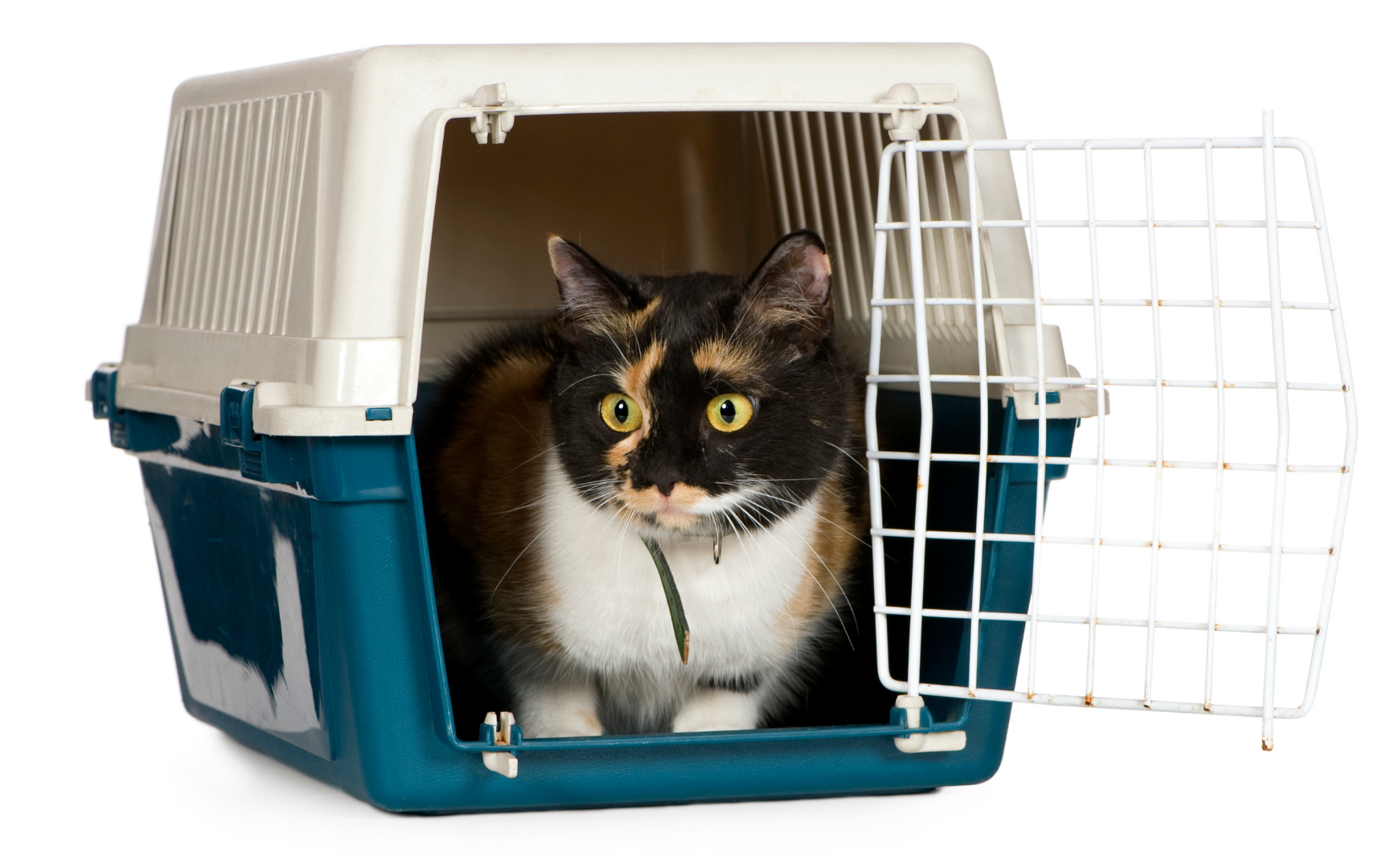
Crate: Must let the animal stand, sit, turn, and lie naturally, sized per IATA's body-measurement guidance, with secure ventilation, a leak-resistant base, absorbent bedding, secure fasteners, externally accessible water, no sharp edges, and contact labels. Buy early and let the pet get used to it.
-
Avoid unnecessary sedation: IATA discourages it, since it can impair balance, breathing, and posture in transit. Medically necessary medication should be vet-prescribed, disclosed to the airline, and logged on the health certificate.
Final Pre-Departure Check
Days before travel, verify: microchip scans correctly and matches all documents, rabies vaccination is still valid, antibody test is original and complete, other lab results are ready, import approval and health certificate remain within validity, endorsements are complete, SSM-QC and Prior Notice are submitted, the airline has confirmed the pet, and the quarantine office knows the arrival date. Carry printed originals with the owner or representative, not attached to the crate. IATA recommends reconfirming with the airline at least 48 hours ahead.
Arrival in Indonesia
-
Report immediately: The owner or sender must present the pet and its documents to quarantine officers at the entry point. Officers may scan the microchip, verify identity, check paperwork, physically examine the animal, and order further testing, treatment, or transfer to a quarantine facility (with associated fees).
-
Quarantine action: Release happens once required actions are complete and a quarantine vet certifies the animal healthy, issuing a Quarantine Release Certificate. There's no universally fixed duration; a commercial source cites roughly 7-14 days in Jakarta as typical, but confirm actual duration, facility, fees, and release conditions with the quarantine office directly. Ask about housing, visiting, food/medication management, extra testing scenarios, fee calculation, and authorized collection.
-
Keep release documents, they matter for local registration, future domestic moves, or eventual export.

If Bali Is the Final Destination
Clearing Indonesian import doesn't authorize entry into Bali. Bali Governor Regulation No. 88 of 2008 still governs the temporary closure of entry/exit for dogs, cats, monkeys, and other rabies-vector animals in the province. Before any onward transfer, contact Bali's Quarantine office and provincial animal-health authority, provide the pet's full record, state the entry point and proposed route, and get written confirmation the movement is permitted, a carrier's willingness to transport isn't proof of authorization. See our earlier article for more on Bali's restrictions.
Final Checklist
Route confirmed → entry point confirmed → microchip → vaccinations → antibody test → species-specific tests → import approval → health certificate + endorsement → SSM-QC → Prior Notice → airline confirmed → crate ready → arrival procedure confirmed → payment/collection arranged → Bali guidance obtained if applicable.