






Most families arrive at this question in a hurry. A parent falls, a diagnosis lands, or an arrangement that worked for years stops working in a fortnight. The question is rarely whether Bali is a pleasant place to grow older, but whether someone can stay in the house they are already in, and what that takes.
In Bali, Care Comes to Your Home
In most countries, elderly care means moving into a facility, because one person helping one person all day is the costliest model there is.
In Bali that calculation inverts. One-to-one care at home is affordable in a way it rarely is in the countries most residents come from, so the carer comes to the house and the house stays the home. That’s why senior care here looks sparse when you search for buildings and much deeper once you search for people: two private residential options island-wide, and a home care market many times that size. It also makes the property part of the care plan, which most families consider last and should consider first.

Start With the Hospitals
The most straightforward entry point to home nursing in Bali is a hospital rather than an agency.
BIMC runs home care from its Kuta and Nusa Dua hospitals, covering doctor visits, nursing, wound care, physiotherapy, vaccination and lab sampling at home. It serves families with an elderly relative needing professional care as well as patients continuing treatment after discharge, and existing patients arrange it through the doctor and ward nurse who already know the case. Siloam and Kasih Ibu run comparable programmes.
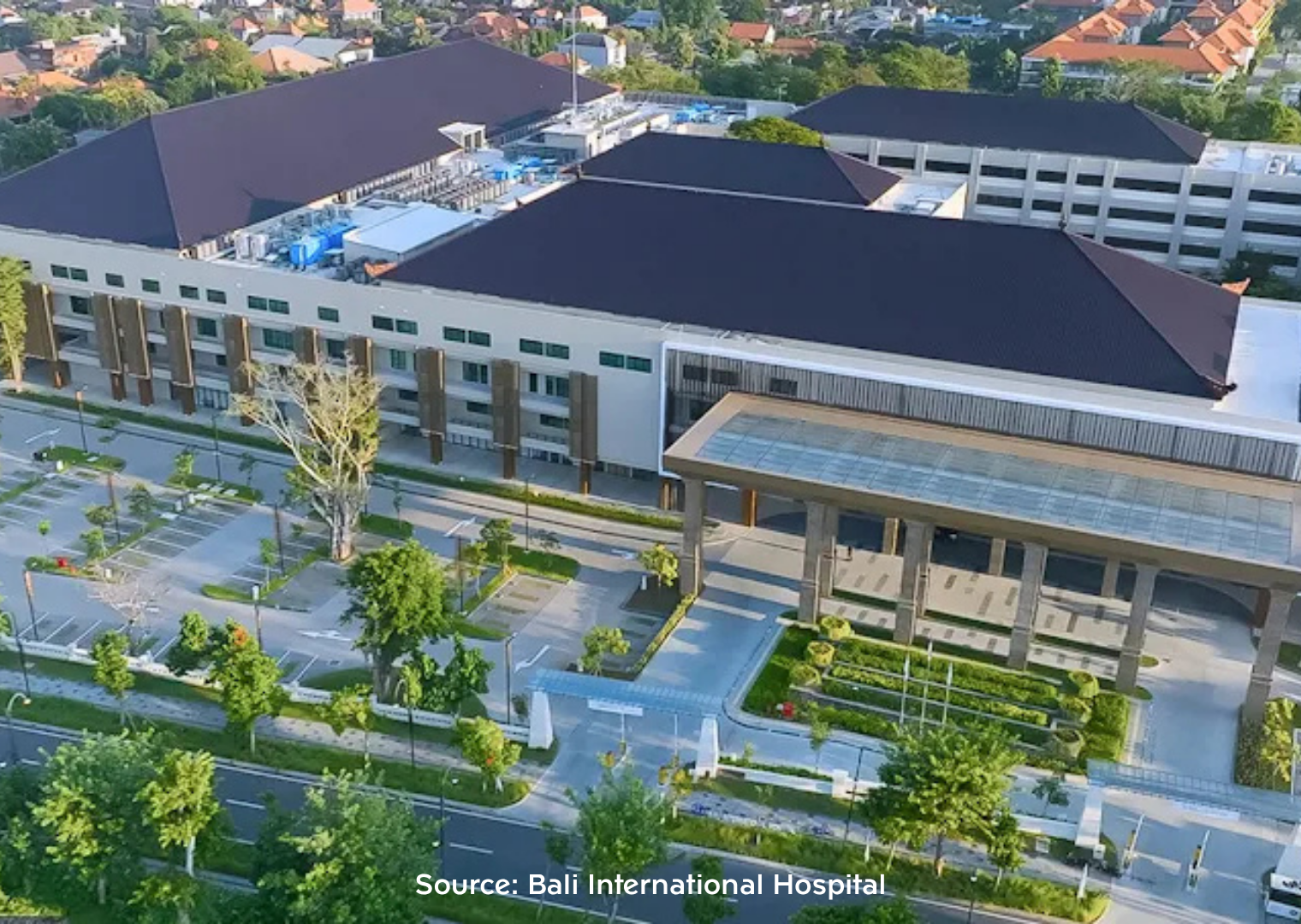
A development behind them changes long-term planning here. Bali International Hospital opened in Sanur as the anchor of the island’s health special economic zone, with a Mayo Clinic affiliation and around 250 beds including intensive care. Complex cases that once meant a flight to Singapore can increasingly be handled here, which makes Sanur and east Denpasar a different proposition for anyone choosing where to be based.
Hospital care costs more than hiring privately, and what the difference buys is verified credentials, a doctor who can escalate, and somewhere to raise a problem.

Specialist and Independent Providers
Hovi Care has Finnish roots and three decades in elderly care, operating in Bali since 2019 with a day centre in Denpasar and assisted living in Gianyar. It also lists an in-home service, Hovi Home, with little published detail, so that one is worth a direct conversation. Its training is specific to elderly and dementia care rather than general nursing.
Bali One Care, in Denpasar, was founded by a registered nurse with fifteen years of experience in Bali and overseas. It provides nursing, respite and personal care, and rents equipment families need at short notice: wheelchairs, walking aids, oxygen and shower chairs.
Several independent agencies also arrange care at home. These are private operators rather than institutions, so the checks below apply in full.
-
Arsanti Homecare — Denpasar Utara, 24 hours, caregiving as well as nursing
-
Med-Care Homecare Bali — Dalung, morning to late evening
-
Perawat Home Care Bali Kasih — Denpasar Barat, 24 hours
-
Perawat Homecare Sri Rahayu — Seminyak, weekdays and Saturdays
-
Medika Home Care Bali — Dalung, extended hours daily
For doctor visits at home, PRO Medical Canggu and Prastha Medical Canggu run 24 hours, as does Bali Medical Service in Tibubeneng.
Worth knowing before you call: much of Bali’s home nursing capacity was built around short-term visitor medicine, so ask directly about ongoing elderly care rather than inferring it from a service list.

Nurse, Caregiver or Companion
A nurse holds clinical training and handles medication, wound care, catheters and injections. A caregiver supports daily living, washing, dressing, transfers, mobility, meals, company, without clinical scope. A companion provides presence and practical help, which for someone lonely rather than unwell is often right and costs the least.
Visiting care is arranged by the hour; live-in care means a carer based in the house, which is where staff accommodation starts to matter. Nights are the part families underestimate: a carer who started at 7 AM cannot also cover 3 AM, so overnight support means a second person and a second rota.
How to Check a Provider
For a nurse, ask to see the STR and the SIPP, the registration certificate and the licence to practise. Both are issued to a named individual and can be shown to you. A nurse who deflects has answered the question.
For an agency, ask which legal entity you are contracting with and whether staff are employed or merely introduced, since that decides who carries responsibility if something goes wrong. Then: who covers a shift when the carer is ill or at a ceremony, is there insurance, what sits inside the carer’s scope, and is there a written agreement in a language you read.
Start with a trial, because a fortnight tells you more than any interview, and ask for a reference from a family who used them for elderly care rather than a holiday IV drip.
When Home Care Isn’t the Right Fit
Advanced dementia, conditions needing constant supervision, or a family carer running out of capacity all point toward structured care. Bali has two private residential options.
Hovi Assisted Saba, in Gianyar, is purpose-built assisted living connected to Kasih Ibu Hospital Saba: private rooms, round-the-clock caregivers, meals, activity programmes, and staff trained in dementia care. The same operator runs a weekday day centre in Denpasar for families who need working hours back.
Searches here will also surface the island’s panti jompo, among them PSTW Wana Seraya in Denpasar and Werdha Santi in Tabanan. These are not private care homes. They shelter elderly Indonesians with no family able to care for them, places are allocated through social services on need rather than payment, and they run largely on donations.
Whichever way the care goes, the house is usually the first decision rather than the last. If you are weighing areas, layouts or lease terms with someone’s long-term needs in view, Bali Home Immo can help you look at properties through that lens.