





A New Way To Canggu
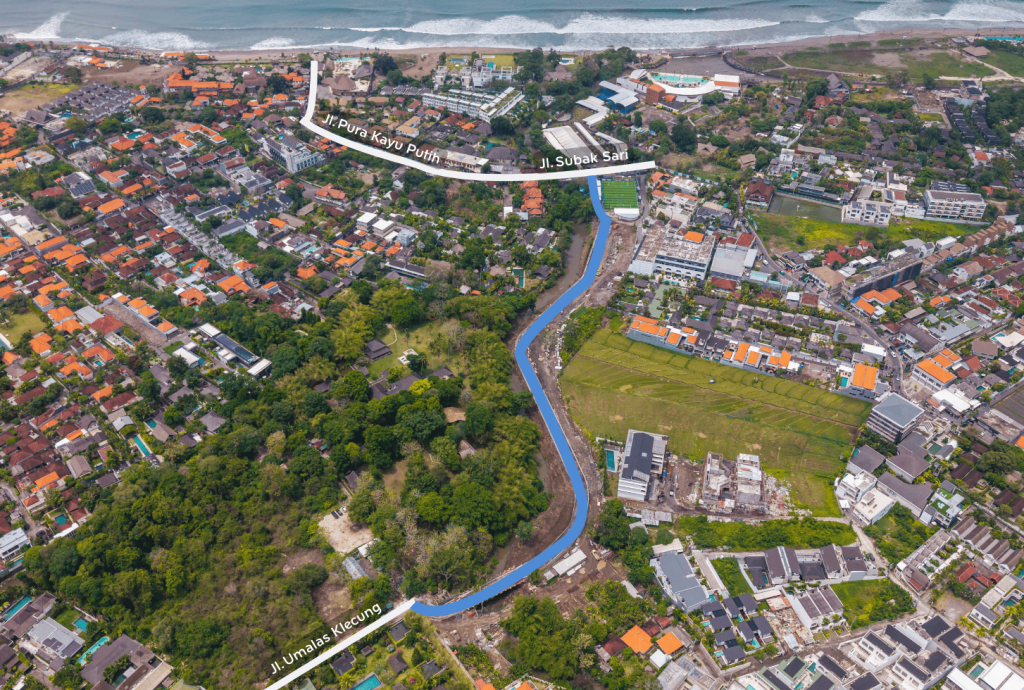
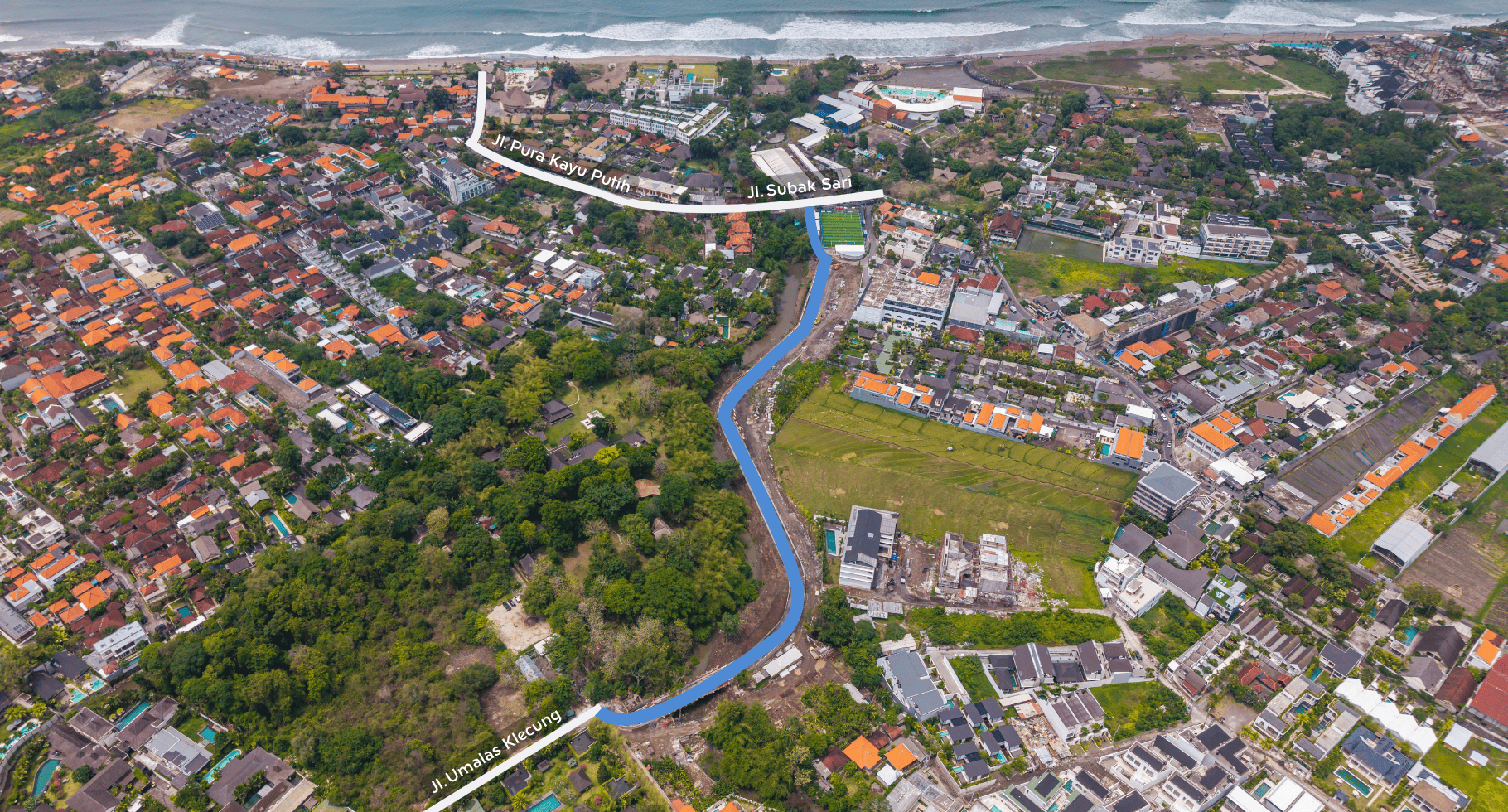
While attention has been on the South Ring Road down on the Bukit, the northern half of Badung’s programme has quietly moved to site. The segment running from Jalan Subak Sari in Tibubeneng through Umalas and into Kerobokan Kelod has been under construction since June, carrying a Rp 74 billion budget and a December completion date. The drone view above shows the new carriageway where it tracks the brand new route.
Project details
|
Route |
Teuku Umar Barat → Semer → Umalas → Jalan Subak Sari, Tibubeneng |
|
Corridor described by PUPR |
Subak Sari or Batu Bolong, through Umalas, to Jalan Semer |
|
Connecting route |
Jalan Banjar Semer → Jalan Teuku Umar Barat, listed separately by Badung PUPR |
|
Contract signed |
12 May 2026 |
|
Completion period |
210 calendar days |
|
Physical work began |
Mid-June 2026 |
|
Budget ceiling |
Rp 74 billion |
|
Financing |
2026 regional loan facility, non-bank lenders |
|
Supervision |
PT Jakarta Rencana Selaras with PT Manik Tribuwana, joint operation |
|
Lead agency |
Badung Regency Government, PUPR |
What Is Being Built Between Subak Sari and Umalas?
I Nyoman R Karyasa, head of Badung’s Public Works and Spatial Planning Office, describes the corridor as running from Subak Sari or Batu Bolong through Umalas to Jalan Semer. This new Umalas to Canggu Shortcut cuts across vacant commercial land near Cafe del Mar, which is where the fresh carriageway in the drone view sits.
The Umalas leg is a different kind of work. Rather than a new alignment, it centres on jalan Umalas Klecung, where crews have been laying sidewalk foundations along both sides, around 700 metres excavated by the time the regency reported progress, alongside resurfacing. That distinction matters for anyone living on the street: one end of the segment is earthworks through open land, the other is a working road being rebuilt around existing traffic.
The segment carries a Rp 74 billion budget ceiling, financed through a 2026 regional loan facility from non-bank lenders, one of several instruments Badung is drawing on to run the programme’s segments in parallel rather than in sequence.
How Does This Fit with the Berawa Shortcut?
This is where it gets interesting for anyone who drives the Umalas Canggu run.
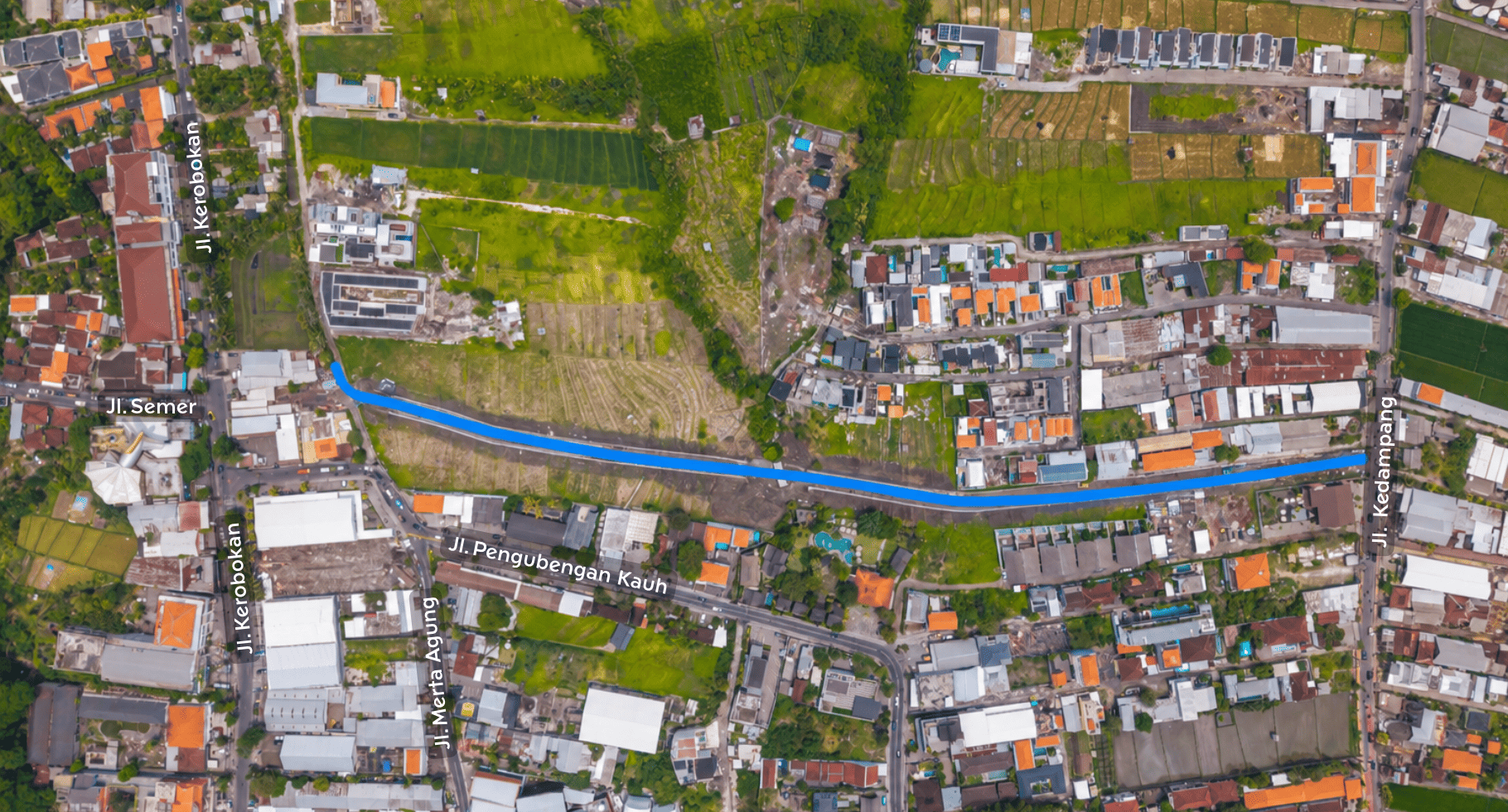
In September we covered the groundbreaking on Badung’s Rp 2.9 trillion road programme, and the part of it with the most immediate relevance to this side of the island was the Berawa Shortcut: 4.77 kilometres running from Umalas through Kedampang to Teuku Umar Barat, built to relieve the Simpang Semer bottleneck. That was the Denpasar-facing half of the story, and Umalas was where it began.
The Subak Sari works are the other half arriving. This segment approaches Umalas from the opposite direction, bringing traffic down from Batu Bolong and Tibubeneng, and Regent I Wayan Adi Arnawa set out the full connected route in August, Canggu, Berawa, Banjar Umalas, Seminyak and Kedampang through to Teuku Umar Barat.
End to end, that puts a continuous alternative between Batu Bolong and Teuku Umar Barat that bypasses the Raya Canggu and Simpang Semer sequence. Umalas sits at the hinge of it, which is why the segment now under construction there matters more than its budget line suggests.
What Does This Mean for Properties in Umalas?
Access is usually what reprices a pocket, and Umalas bali has been priced as the quiet side of the equation, a residential and long-stay area reached by turning off the main flow rather than sitting on it. Villa Umalas stock has traded on exactly that: space, calm, quick reach to Seminyak and Canggu without the noise of either.
A through-route changes the position rather than the product. Umalas gains direct access in two directions at once, which widens who finds it practical, long-stay tenants working across Seminyak and Canggu, families running a school route, owners who want to be near the strips without being on them. Land adjoining the new alignment near Cafe del Mar sees the most immediate change, since that stretch moves from back land to road frontage.
What does not change is what decides a purchase. Zoning, legality, build quality and genuine rental demand determine whether a property performs. Improved access is upside on top of those, not a substitute for them, and the sensible move is assessing a property on its own merits and treating the road as a bonus that arrives on a government timeline.
When Does It Finish?
The contract carries a 210-day completion period from the May signing, which points to early December 2026. Physical work started in mid-June.
That is a contractual period on an Indonesian road project, so direction of travel is a better reading than a fixed date. What has changed since the groundbreaking is that this segment is no longer a line on a programme: the contract is signed, the money is committed, and asphalt is down on the ground.


