Ubud has always occupied a unique position in Bali’s real estate landscape. While the southern coastal regions of the island, Seminyak, Canggu, and Uluwatu, thrive on a high-energy, tourism-centric model, Ubud offers an investment narrative rooted in longevity, wellness, and a deep emotional connection to the landscape. Investing here is not simply a play on property appreciation; it is an investment in a global center for culture and intentional living.
As we look at the data for 2026, one thing is clear: while the coast is for "the scene," Ubud is for the "stay."
Why Ubud Attracts a Different Kind of Buyer
The primary draw for Ubud is its departure from the typical "beach holiday" fantasy. Buyers and investors here are rarely looking for beach clubs or sunset traffic. Instead, they are attracted to the "slow life": garden mornings, open-air breakfasts, and a daily rhythm defined by greenery rather than nightlife.
The value of a property in Ubud is measured by its "Visual Calm." This isn't just a poetic term; it’s a market metric. The quality of a rice-field view, the depth of jungle-edge privacy, and the literal silence of a valley are what drive premium nightly rates. Once the novelty of a standard holiday wears off, the high-net-worth traveler seeks a sanctuary, and Ubud is the only region in Bali that delivers this consistently.
The Appeal Goes Beyond Tourism
While Ubud remains a bucket-list destination, its property market is increasingly supported by a diverse group of long-stay residents. This is no longer just a place for a three-day weekend. The demographic shift includes:
-
Remote Professionals: Who leverage Bali’s creative community.
-
Wellness-Minded Families: Seeking nature-integrated education and lifestyles.
-
Retirees: Valuing the peaceful environment and burgeoning international healthcare facilities.
This shift from high-turnover tourism to a more settled, residential-based demand creates a broader and more resilient investment environment than areas purely reliant on short-stay holiday traffic.
What Makes Ubud a Strong Investment Area
Cultural Permanence: A Global Landmark
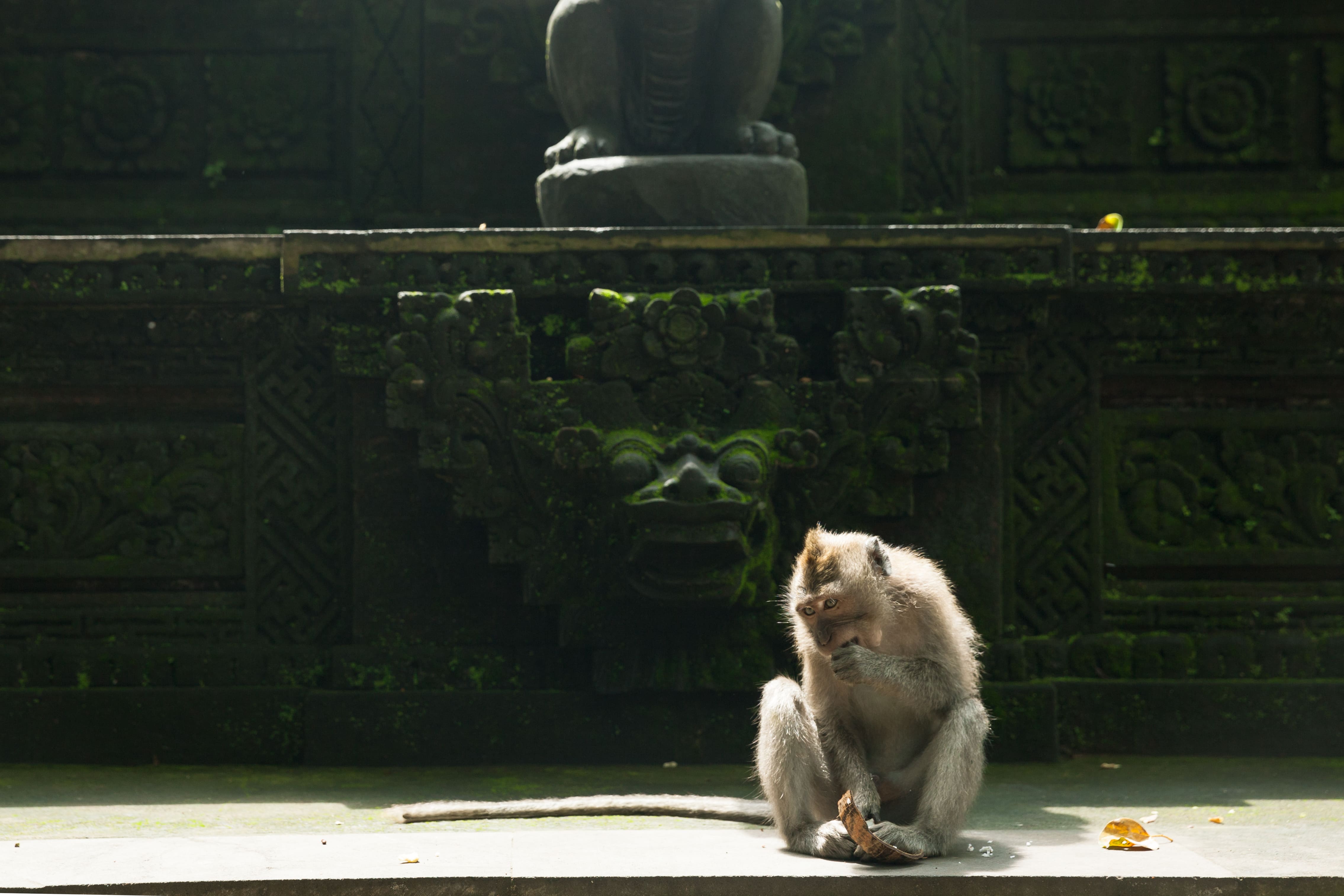
Ubud represents a non-negotiable anchor in the Bali itinerary. Whether a traveler is drawn by wellness, creative pursuits, or cultural exploration, this region remains a primary destination. This creates a baseline of demand that is insulated from the shifting trends of coastal "fashion," offering investors a level of long-term stability that is rare in the island's tourism-heavy markets.
The Rarity Play: Green Zone Scarcity
The most critical driver for capital appreciation in Ubud is the preservation of the Green Zone. Large tracts of land surrounding the core are designated as Jalur Hijau, protected from development to safeguard the subak irrigation systems and the integrity of the jungle canopy.
-
Exceptional Rarity: Because development is strictly capped to preserve the landscape, buildable land is becoming a finite resource.
-
Asset Protection: In a market where supply is legally constrained but demand continues to rise, the value growth becomes exponential. Securing a property with a protected view ensures that your "visual calm" can never be compromised by future construction.
The Villa Vacuum: Capturing Private Luxury
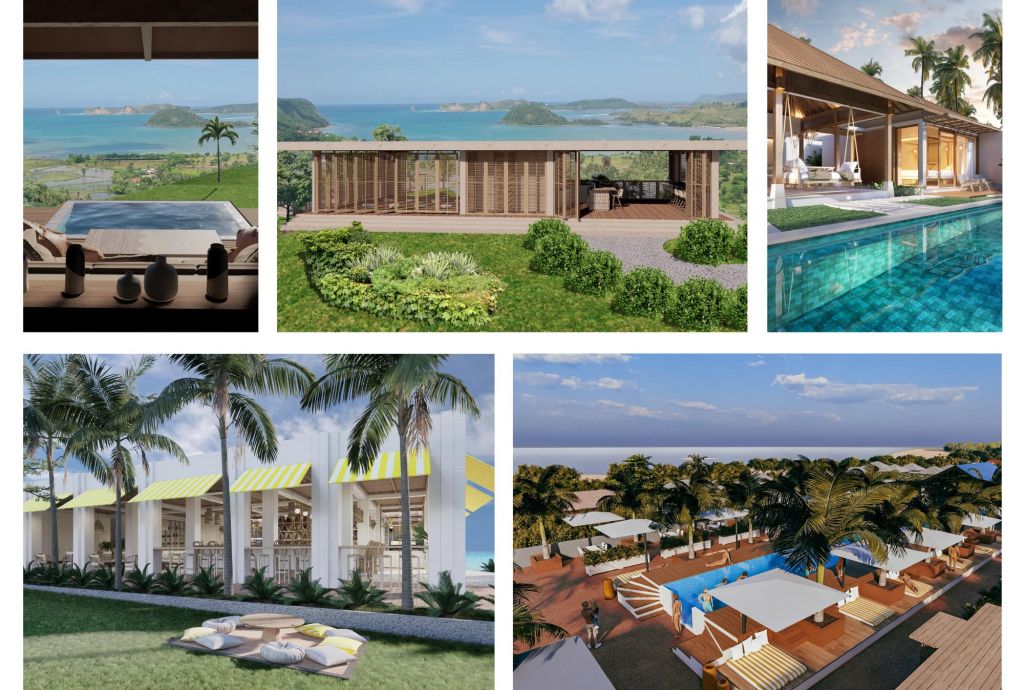
While Ubud is renowned for its world-class resorts, there remains a significant deficit in the high-spec private villa sector. Modern travelers and long-stay residents increasingly prioritize the privacy and autonomy of a personal residence over a shared hotel environment.
-
Market Demand: There is a consistent appetite for the exclusivity that only a private villa can provide.
-
High-Growth Opportunity: Modern 2- and 3-bedroom villas with private pools and enclosed living spaces are in high demand but short supply. This creates a lucrative opening for investors to capture the "Private Luxury" segment that traditional hotels cannot satisfy.
Occupancy Resilience
The data confirms that Ubud maintains some of the highest occupancy rates in Bali. While southern markets often experience volatility based on seasonal social trends, Ubud’s wellness-anchored economy provides a stable foundation. As a year-round destination where the landscape remains alluring in any season, owners benefit from a consistent revenue stream throughout the calendar year.
A Detailed Market Breakdown of Ubud
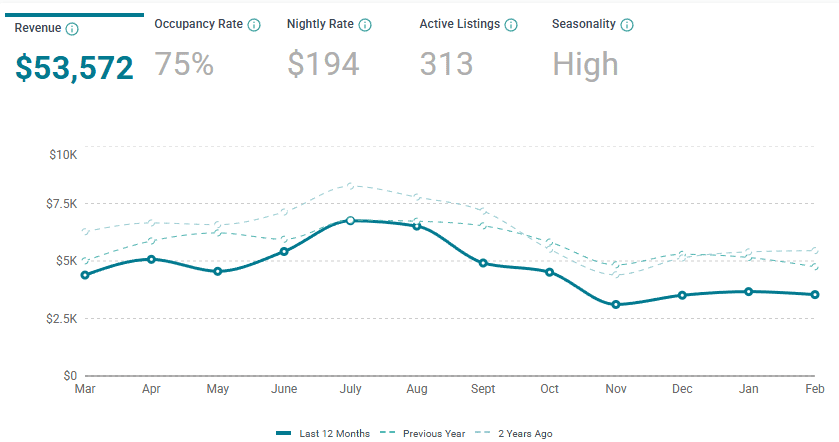
To understand the mechanics behind this stability, we must look at the hard numbers. The following data showcases how Ubud’s occupancy and nightly rates have remained structurally sound, even as coastal markets face a "Darwinian" shakeout in 2026:
Source: Airbtics
Central Ubud: The High-Traffic Core
Central Ubud remains the choice for those who prioritize walkability. However, with 313 active listings in the sector, you are fighting for visibility.
-
Market Performance: Maintaining a 75% occupancy here requires a top-tier management team and a "Instagram-ready" aesthetic.
-
Revenue Metrics: With a total annual revenue of $53,572, investors are looking at a gross yield that remains attractive, provided the land lease was secured at a reasonable rate.
The "Hidden" Yields: Beyond the Center
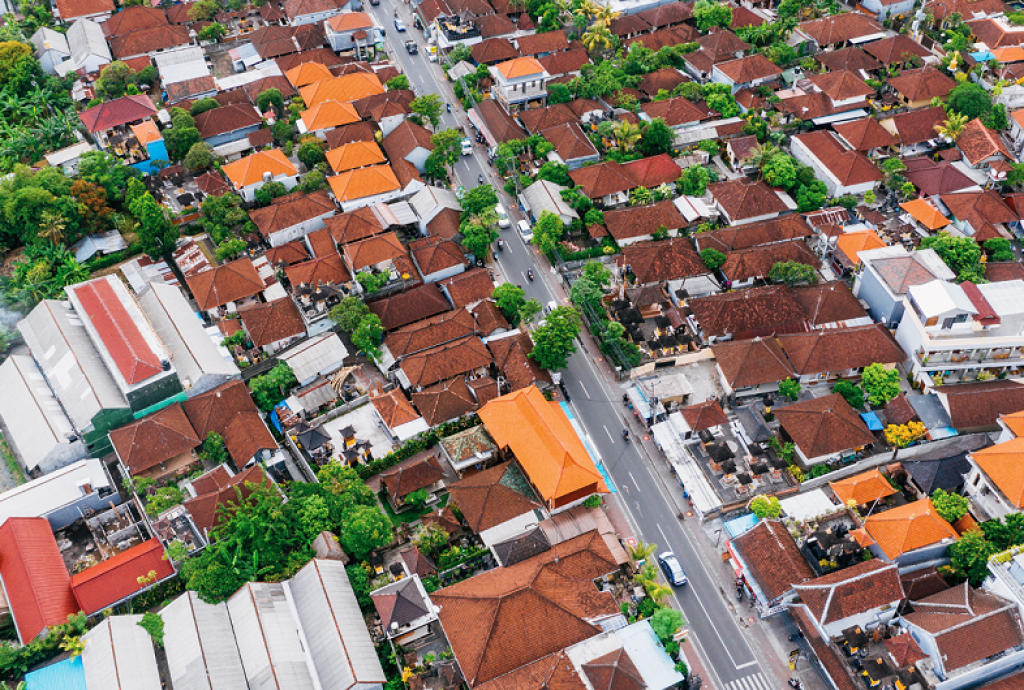
While the provided data focuses on the core, our internal analysis at Bali Home Immo shows that the "overflow" into areas like Sayan and Tegallalang is where the highest growth is happening. As the center becomes more "saturated," the premium nightly rates are moving to the ridges where the views are unobstructed.
Why Ubud Works for Long-Term Investors
A Market Defined by "Visual Calm"
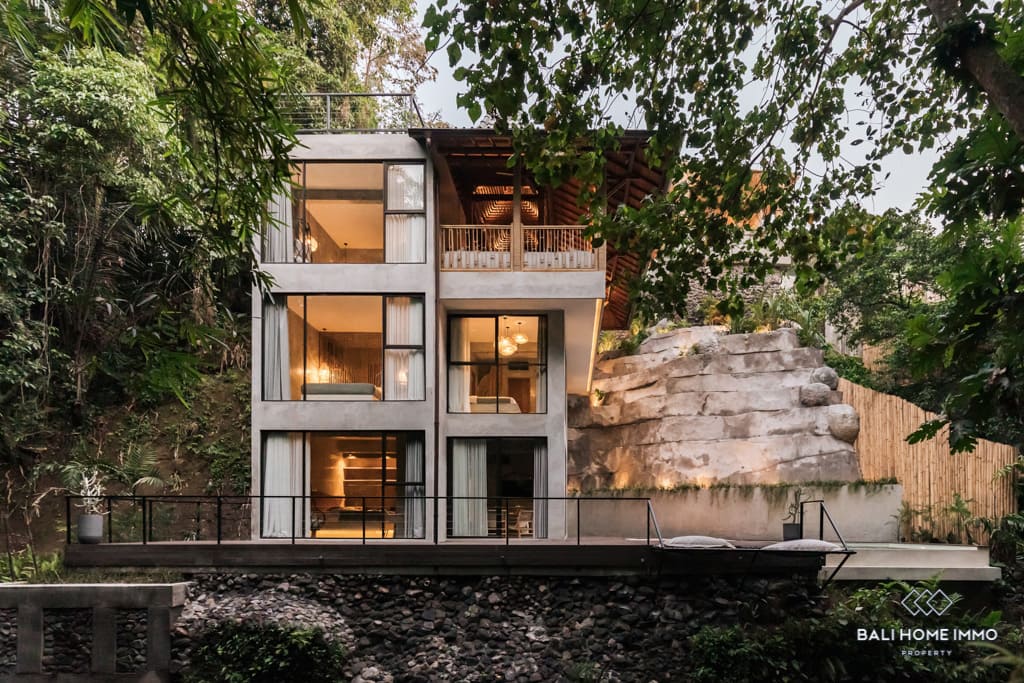
Ubud’s primary appeal is its departure from the standard beach holiday model. Here, value is measured by "visual calm", the seamless integration of architectural design with the natural environment. In this market, nature is never a background feature; it is the core of the property’s identity.
The Power of Landscape Identity
Scenic outlooks, whether valley views, jungle edges, or expansive rice fields, add a layer of "market appeal" that makes properties less interchangeable. A villa with a protected view commands a permanent premium because it offers a sense of space and tranquility that cannot be replicated in the dense urban sprawl of coastal Bali. High-performing assets prove that the market rewards this integration with superior long-term livability.
FAQ
Is Ubud a good place to invest in property? Yes. For investors seeking a "lifestyle-first" asset with strong long-stay demand and cultural permanence, Ubud remains the most stable market in Bali. It is less volatile than the "trend-based" markets of the south.
Is Ubud better for long stays than short stays? Ubud excels at both. However, its unique market strength is its ability to attract "mid-term" residents staying for 1 to 6 months. This provides a consistent base of income that coastal markets often lack during the shoulder seasons.
Which part of Ubud is best for investment? Currently, Pejeng and Tampaksiring offer the highest occupancy (84%) and nightly rates ($225). These areas offer the "Old Ubud" feel that travelers are now seeking as the center becomes more crowded.
Do nature views increase property appeal in Ubud? Incredibly so. Nature views are the primary emotional hook. In a market where the average rate is $194, a "brick wall view" will struggle to hit $100, while a "jungle infinity view" can easily command $250+.
What kind of property works best in Ubud? Focus on 2-bedroom villas with high-end finishes, enclosed living spaces for climate control, and a focus on "Visual Calm."