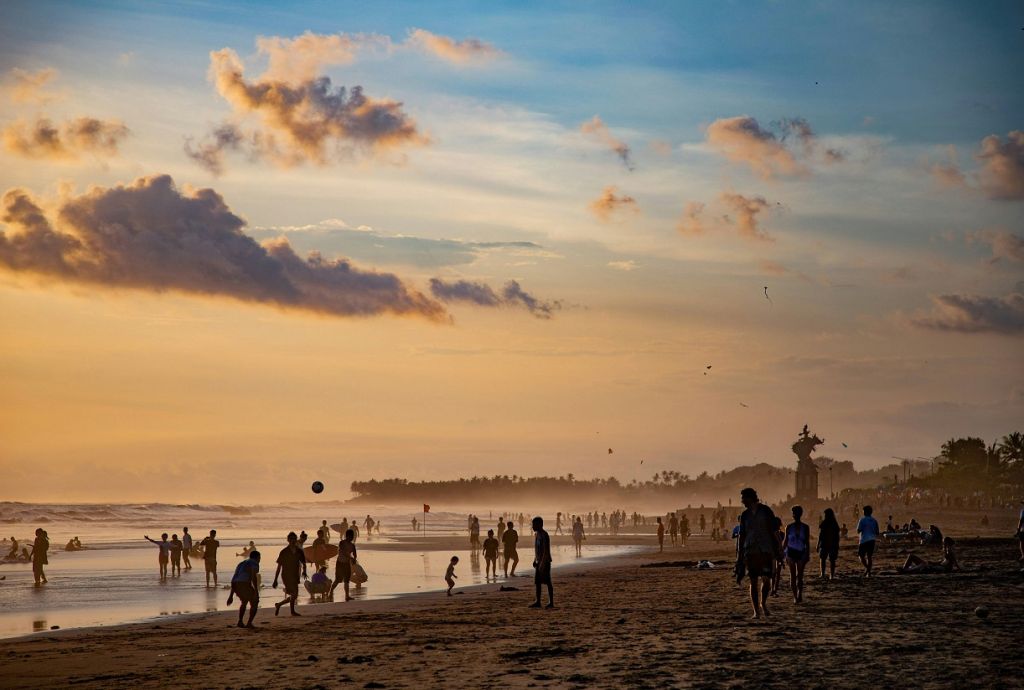





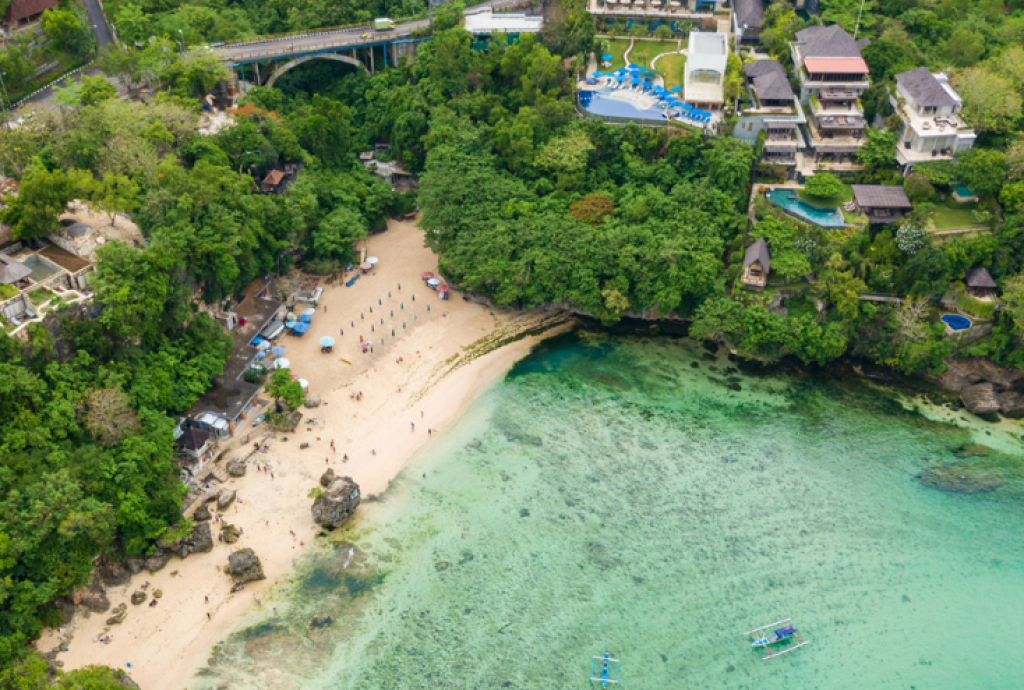
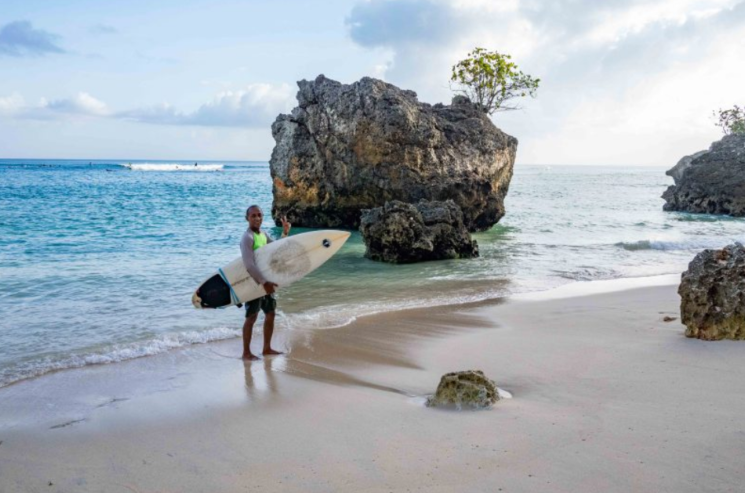
Padang Padang Beach is a small hidden cove in Uluwatu, Bali, known for its soft white sand, iconic surf breaks, has captured the hearts of surfers, beach lovers, and movie-goers alike. Located in Pecatu, Uluwatu. And its appearance in the film Eat Pray Love. Despite the global attention, its real charm comes from its natural beauty, it still feels like a tucked-away beach: sheltered beneath towering limestone cliffs and reached through a narrow rock crevice that opens dramatically onto turquoise water.
Below is your complete Padang Padang Beach guide: why it’s worth visiting, how to get there, costs, best time to come, things to do, and how to enjoy it safely and respectfully.
Padang Padang Beach: Why Visit?
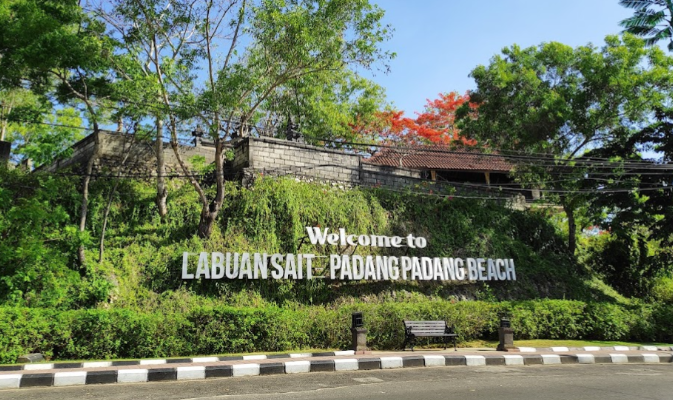
Padang Padang Beach (locally called Pantai Labuan Sait) offers a mix of natural beauty and world-class surf. This 110-meter stretch of fine white sand is framed by dramatic limestone cliffs
Framed by rugged cliffs and lush greenery, the cove has a naturally “secret” feel, especially when you first step out from the cave-like entrance onto the sand. It’s internationally known for:
-
A powerful left-hand reef break nicknamed the “Balinese Pipeline”, attracting advanced surfers from around the world.
-
Calm, clear shallows closer to shore at lower tide, ideal for relaxed swimming.
-
Its role in Eat Pray Love, which helped showcase its cinematic cliffside setting to a global audience.
While it’s no longer a true “hidden” beach, arriving at the right time still gives you that intimate, tucked-away atmosphere that makes Padang Padang a must-visit in Uluwatu.
Location and Access
Padang Padang Beach is located on the west coast of the Bukit Peninsula in Pecatu Village (South Kuta District), around 20 km from Ngurah Rai International Airport.
-
Drive time: roughly 45–60 minutes depending on traffic.
-
Access road: just off Jalan Labuan Sait, the main Uluwatu strip.
-
Parking: a designated parking area is available near the entrance, with a small fee.
From the entrance, the approach itself is part of the experience:
You walk past the ticket booth, follow a short path, then descend a steep, narrow stairway (around 100–120 stone steps) carved between cliffs and boulders. The final squeeze through a limestone gap suddenly opens to the sand and sea, one of the most memorable entries to any beach in Bali.
Key notes:
-
Not wheelchair-accessible and challenging for strollers or limited mobility.
-
Stairs can be slippery; wear proper sandals/shoes.
-
One-way, single-file sections, take your time and be patient.
Entrance Fee and Facilities
Padang Padang keeps things simple and local while offering enough facilities for a comfortable day.
Entrance fee (subject to change, cash only):
-
Around IDR 15,000 per adult, with lower rates often applied for children and local visitors.
Parking:
-
Approx IDR 2,000 for motorbikes.
-
Approx IDR 3,000–5,000 for cars.
Facilities You Can Expect
-
Warungs & cafés: Small local stalls near the entrance and along the beach selling fresh coconuts, cold drinks, light meals, and snacks.
-
Sun loungers & umbrellas: Available for rent (commonly around IDR 100,000 per day depending on season and negotiation).
-
Surfboard rentals: Multiple local operators offering board hire; lessons can be arranged informally on-site.
-
Showers & toilets: Basic rinse-off showers and simple toilets near the entrance/parking.
There are generally no secure lockers, so keep valuables minimal and within reach.
Pro tips:
-
Bring cash in small denominations (entrance, parking, drinks, rentals).
-
Don’t rely on card payments or ATMs at the beach.
Things to Do at Padang Padang Beach
1. Surfing
Surfing is the headline act at Padang Padang.
-
The main break, Padang Padang Left, is a shallow, fast, hollow reef wave suited only for experienced surfers.
-
On smaller swells or at the inside section (“Baby Padang”), conditions can be more forgiving and suitable for intermediates.
-
If you didn’t bring a board, you can rent on the beach; local surfers and beach operators also offer informal lessons.
Always be honest about your level: the outer reef is powerful, shallow, and can be dangerous if you’re not confident.
2. Swimming and Snorkeling
Closer to shore, Padang Padang offers a more relaxed side:
-
At low tide, a calm natural lagoon forms, protected by the reef, making it pleasant for casual swimming.
-
Water is usually clear and turquoise, great for a refreshing dip and photos.
-
Snorkeling is possible along the rocky edges and near the reef; visibility and fish life vary, but it’s a nice bonus if you already enjoy the water.
Keep in mind:
-
Watch for rocks and coral underfoot.
-
Conditions change with tide and swell, if waves look strong, stay closer in and avoid venturing too far out.
Best Time to Visit
You can visit Padang Padang Beach year-round, but timing makes a huge difference to your experience.
Dry Season (April–October)
-
Sunny, drier weather; lower humidity.
-
Great for swimming, sunbathing, and consistent surf.
-
Also peak tourist season, more crowds and higher nearby accommodation prices.
Wet Season (November–March)
-
Warmer, more humid, with short but intense showers.
-
Often fewer crowds between clear spells.
-
Swell can be stronger, more exciting for advanced surfers, more caution required for swimmers.
Tides & Timing
Padang Padang is tide-sensitive:
-
Low tide: more exposed sand, easier access, visible tide pools, calmer inner lagoon.
-
High tide: beach space shrinks significantly; entrance gap can feel tighter and waves may push higher up the shore.
Best overall times to visit:
-
Early morning (before 9 AM): coolest, quietest, best for photos.
-
Late afternoon (after 4 PM): softer light and sunset vibes.
-
Sunset: stunning, but crowded, arrive earlier to secure a spot.
Safety and Etiquette Tips
A bit of awareness goes a long way at Padang Padang Beach.
Water & Surf Safety
-
Treat it as swim-at-your-own-risk: lifeguard presence is limited or inconsistent.
-
Stay inside the calmer lagoon area unless you’re a strong swimmer.
-
Surfers should be aware of:
-
Shallow, sharp reef
-
Strong currents and heavy sets on bigger days
-
-
If unsure, ask locals or instructors on the beach before paddling out.
Monkeys
Monkeys are common around the entrance and cliffs, cute, but cheeky.
-
Keep food, sunglasses, hats, cameras, phones zipped away.
-
Do not feed them; it encourages aggressive behavior and bad habits.
Respect the Environment
-
Use bins where available; if they’re full, take your trash with you.
-
Choose reef-safe sunscreen to help protect the coral and marine life.
-
Avoid stepping on coral or disturbing marine creatures in the tide pools
Stair & Heat Safety
-
The stairs are steep and narrow; go slowly, especially when carrying boards or bags.
-
The sun in Uluwatu is intense:
-
Use sunscreen
-
Drink plenty of water
-
Take breaks in the shade
-
Final Thoughts on Padang Padang Beach
Padang Padang Beach delivers exactly what people dream of when they think “Uluwatu, Bali”: cliffs, clear water, world-class waves, and a touch of adventure walking through that rock passage onto the sand. Its small size and popularity mean it can feel busy at peak hours, but with smart timing, it still offers that dreamy, semi-hidden cove experience.
Come early, bring some cash, respect the ocean and local culture, keep an eye on the monkeys, and you’ll see why Padang Padang Beach stands out as one of Bali’s most memorable coastal spots.
To make your stay in Padang Padang area even easier, browse our villa for sale and rent near Padang-Padang area, so you can find the perfect base just minutes from the cliffs, surf, and sunset views.