





For years, Seseh has been quietly known as Bali’s hidden coastal gem, a purist retreat of black sand and sweeping rice paddies, sheltered from the intense commercial velocity of its southern neighbors. But as we move through 2026, the secret is officially out. According to the latest market data, Seseh is no longer just a sanctuary for travelers; it has evolved into one of the most efficient, high-yielding investment corridors on the island's west coast.
For institutional developers and private investors alike, Seseh represents a rare convergence: it possesses the raw, untouched aesthetic that legacy Bali travelers crave, but it generates the rigorous, data-backed financial returns of a mature real estate market. Securing a footprint here is no longer a speculative bet on the future. It is a calculated play on scarcity, premium demographics, and operational efficiency.
Here is the definitive breakdown of why Seseh is named Bali’s coastal gem of 2026.
Beachside Efficiency
The phrase "hidden gem" is often misconstrued in real estate circles as synonymous with "untested" or "low-yield." In Seseh, the data violently shatters this illusion. Seseh is actively absorbing the overflow of ultra-luxury capital from Canggu and Berawa, but it is doing so with a stunning reversal of traditional market dynamics: the inland residential zones are actually outperforming the immediate coastline.
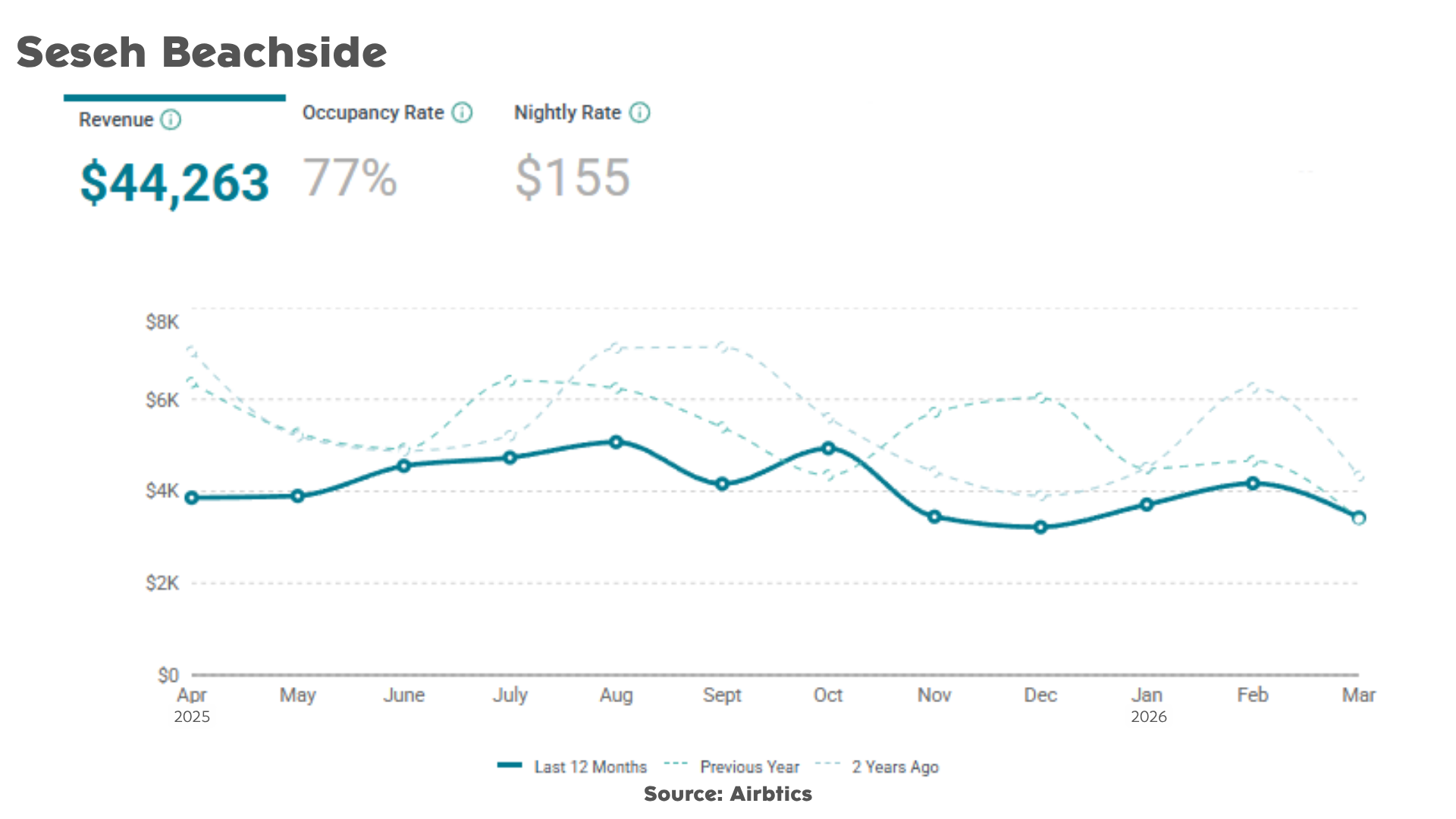
The coastal strip of Seseh is operating with a robust 77% occupancy rate. By maintaining an accessible Average Daily Rate (ADR) of $155 (IDR 2,325,000), this zone generates a strong $44,263 (IDR 663,945,000) in annual revenue per listing.
Residential as the Powerhouse
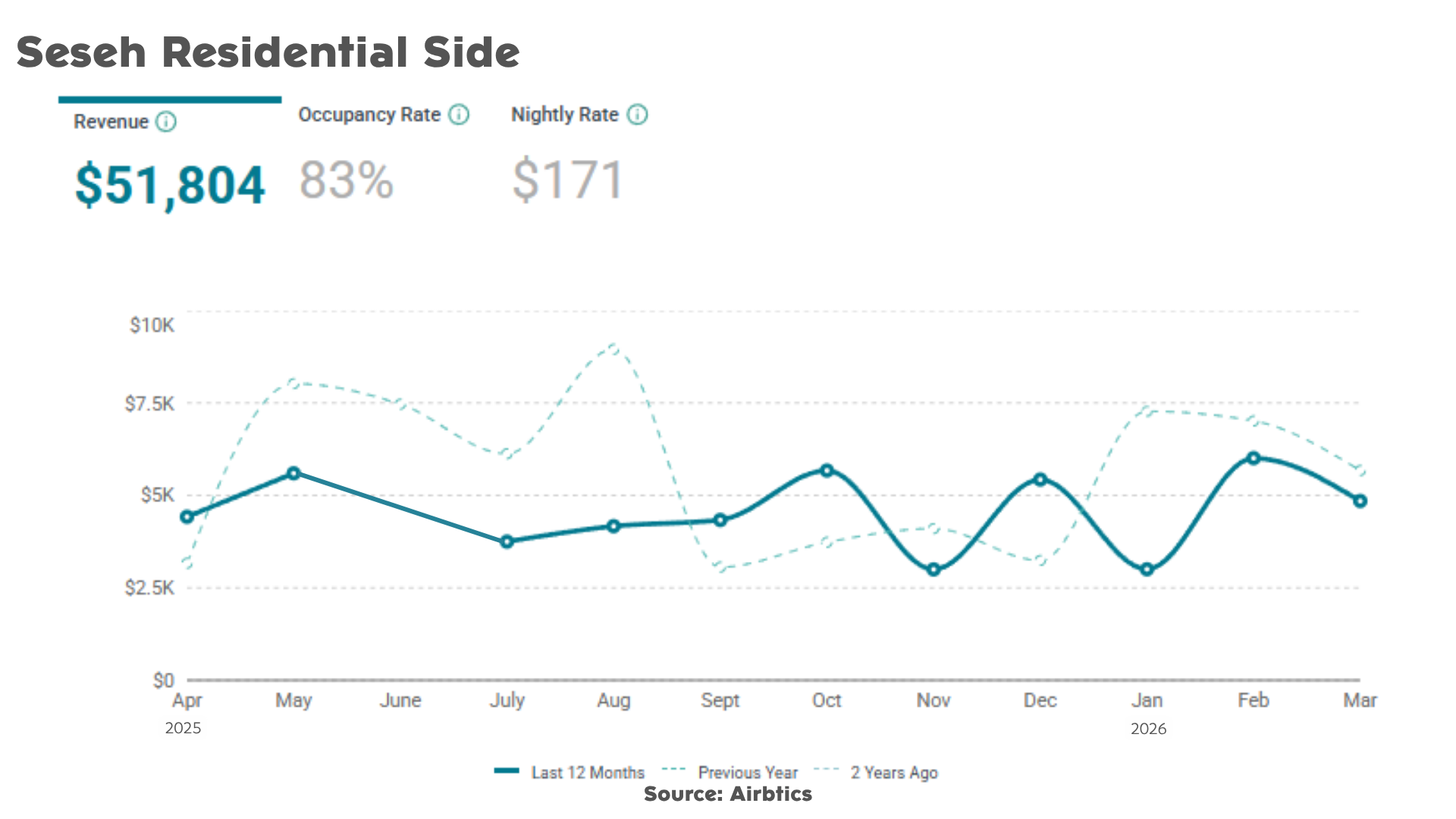
The true financial marvel of Seseh, however, lies inland. Pivoting to the Seseh Residential data reveals a market that is operating at the absolute peak of its carrying capacity.
Properties in the residential sector are commanding a staggering 83% occupancy rate. Even more impressively, the residential side achieves a higher ADR of $171 (IDR 2,565,000), allowing these inland assets to pull in a massive $51,804 (IDR 777,060,000) in gross annual revenue.
Who’s discovering Seseh?
To build a high-yielding asset, an investor must intimately understand the demographic they are building for. Seseh is not drawing backpackers or budget travelers; it is capturing a highly specific, well-capitalized global avatar.
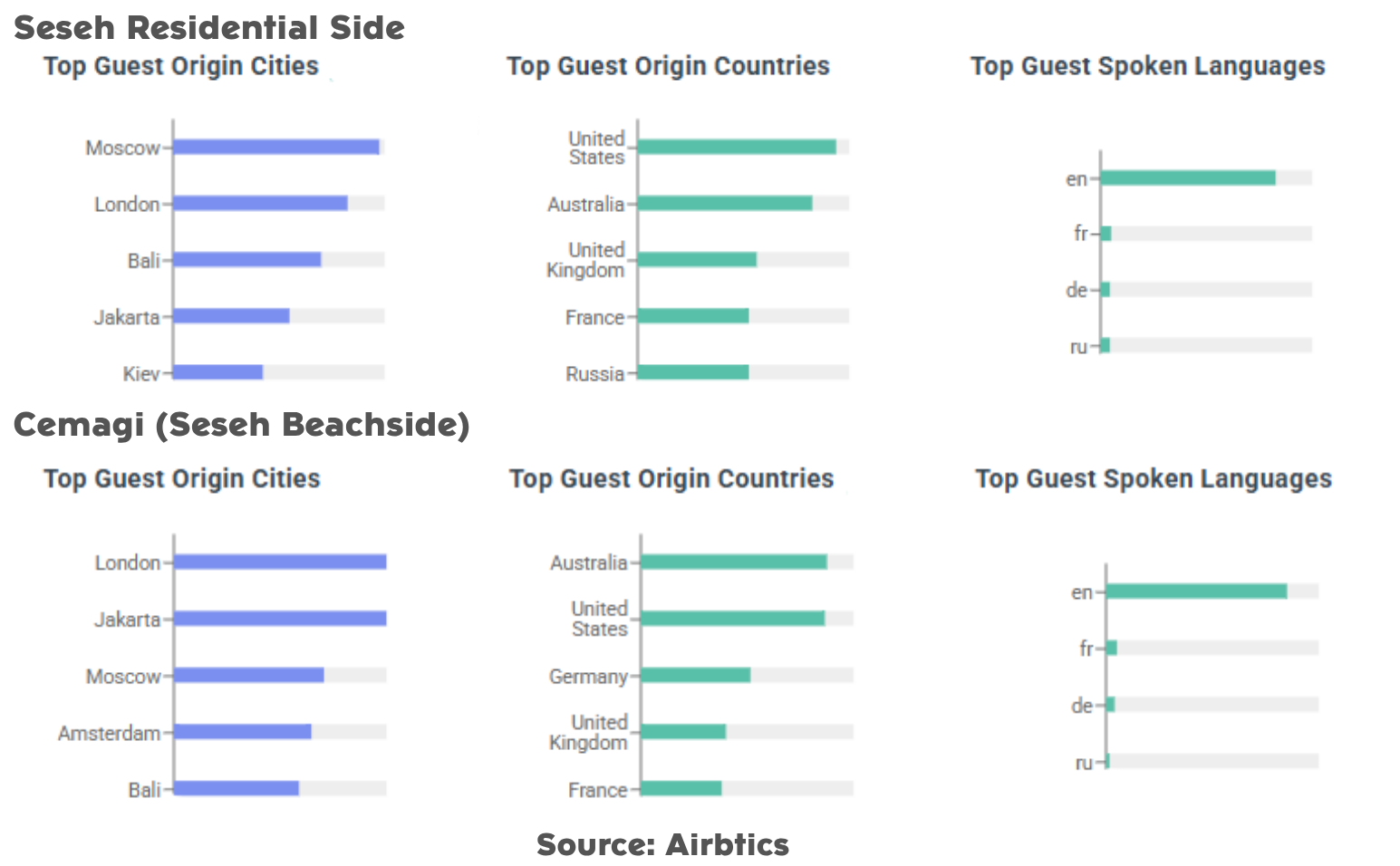
By analyzing the top origins individually, we can see exactly who is driving the high ADRs and occupancy rates across both sectors:
-
London & The United Kingdom: London is the number one origin city for the Beachside sector and the number two city for the Residential sector. The UK also ranks as the fourth top country for Beachside and third for Residential. This indicates a massive influx of high-spending British tourists and remote professionals who are actively bypassing the crowded Berawa scene for Seseh's premium aesthetic.
-
Moscow, Kiev & The Eastern European Market: Moscow completely dominates the Seseh Residential market as the number one origin city, and holds a strong number three spot on the Beachside. Furthermore, Kiev ranks as the fifth top city for the Residential side. This highlights a very established base of long-stay expats and digital nomads from Eastern Europe who heavily favor the enclosed, long-term stability of the residential zones.
-
Australia & The United States: These two economic powerhouses dominate the country-level demand. Australia is the number one country for Beachside demand and number two for Residential, while the United States is the exact inverse: number one for Residential and number two for Beachside. Investors building in Seseh are catering directly to guests with high USD and AUD purchasing power.
-
Dubai & European Financial Hubs: The Residential data shows distinct demand from Dubai (sixth top city), while Amsterdam ranks as the fourth top city for Beachside demand. This proves Seseh is actively capturing the attention of high-net-worth expat hubs and sophisticated European financial centers.
The Domestic & Expat Base: The Ultimate Stabilizer
One of the most critical insights from the 2026 data is the sheer volume of domestic and internal demand. This localized demand creates a powerful stabilizing effect on occupancy during traditional international "low seasons."
-
Jakarta: Jakarta ranks incredibly high as the number two city for Beachside demand and the number four city for Residential demand. This is a massive operational advantage, proving Seseh is a top-tier target for Indonesia's domestic ultra-wealthy seeking luxury weekend staycations away from the capital.
-
Bali & Denpasar: Astonishingly, "Bali" ranks as the number three origin city for Seseh Residential and number five for Seseh Beachside. Denpasar also appears as the eighth top city for the Residential side. This proves that local Bali expats and long-term residents are actively booking properties in Seseh to escape the denser, hyper-commercialized zones of Canggu and Seminyak for their own weekend retreats.
Designing for Demand
With the demographic identified, capital must be deployed to build exactly what these guests are willing to pay for. Analyzing the amenity demand data eliminates the guesswork of architectural design, showing investors exactly where to allocate their construction budgets to maximize their nightly rate.
Demand by the Coast
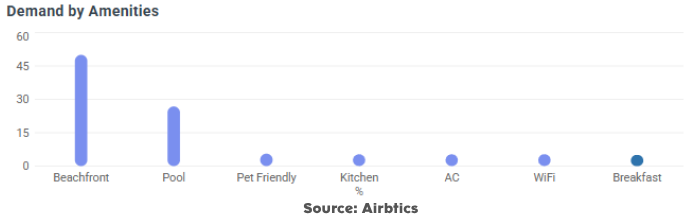
The data for coastal development is beautifully, ruthlessly simple. If you are building on the Seseh beachside, guests fundamentally care about two things: immediate Beachfront Access and a high-quality Pool.
Demand for supplementary amenities, specifically "Amazing Views", drops to almost zero, falling entirely into the "Amenities without noticeable demand" category. The ocean is the view and the ultimate amenity. Capital here must be spent on seamless indoor-outdoor living and premium pool architecture that blends with the coastline.
The Residential "View" Requirement
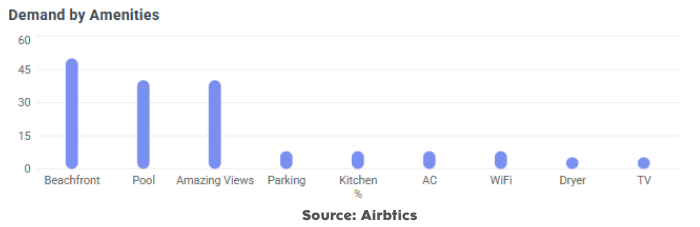
This is the critical "aha!" moment for inland developers. Looking at the chart, demand for "Amazing Views" skyrockets, perfectly matching the demand for a private pool. While "Beachfront" remains the most searched term overall, "Amazing Views and Pool" are tied as the absolute mandatory requirements for an inland booking.
If an investor is building slightly inland in Seseh, they must secure land with sweeping rice paddy views or build vertically to capture distant ocean sightlines. Without the physical sand at their doorstep, guests demand sweeping visual luxury. A residential villa without a view in Seseh is severely handicapped.
Scarcity is Seseh’s Greatest Asset
For institutional investors, the most compelling data point about Seseh isn't just the robust revenue or the high occupancy, it is the spatial planning map (ITR).
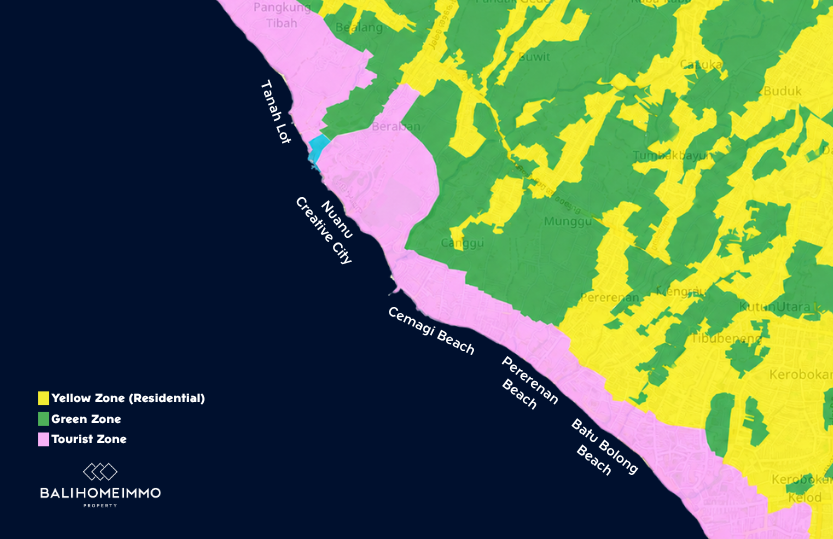
A glance at the official zoning map reveals that the vast majority of the land surrounding Seseh and Cemagi is heavily protected agricultural 'Green Zone'. While amateur buyers frequently view this as a frustrating developmental roadblock, sophisticated investors recognize it as the ultimate protective moat for their capital.
-
The Artificial Supply Cap: Because the local government strictly limits the amount of legally developable "Pink" ("Tourist Zone") and "Yellow" ("Residential Zone") land in this region, the supply of commercial villas is artificially, permanently capped. Seseh simply cannot physically overdevelop into another concrete gridlock like Berawa. Your competition is inherently limited by the law.
-
Protecting the "View" Premium: We know directly from the amenity data that "Amazing Views" are an absolute primary driver for inland Seseh bookings. The abundance of Green Zones guarantees that those sprawling, iconic rice paddy views will remain untouched. When an investor buys a legally zoned plot adjacent to a Green Zone, the government is essentially protecting that asset's most valuable, revenue-generating amenity completely for free.
-
The Rarity Multiplier: This strict agricultural zoning creates intense, compounding scarcity. Legally buildable, high-yield plots in Seseh are rare commodities in 2026. As demand from the international wealth corridor continues to surge, and as the desire for uncrowded luxury accelerates, this restricted supply will violently drive up capital appreciation for the few investors who successfully secure compliant land today.
Seseh is a highly regulated and supply-constrained market, where strong demand from affluent buyers and renters continues to support performance. Strict Green Zone protections limit future development, helping preserve the area’s exclusive, low-density character for years to come.
Securing a legally compliant, developable plot here requires rigorous due diligence, but for those who acquire this rare area, the ROI is surely immediate.