




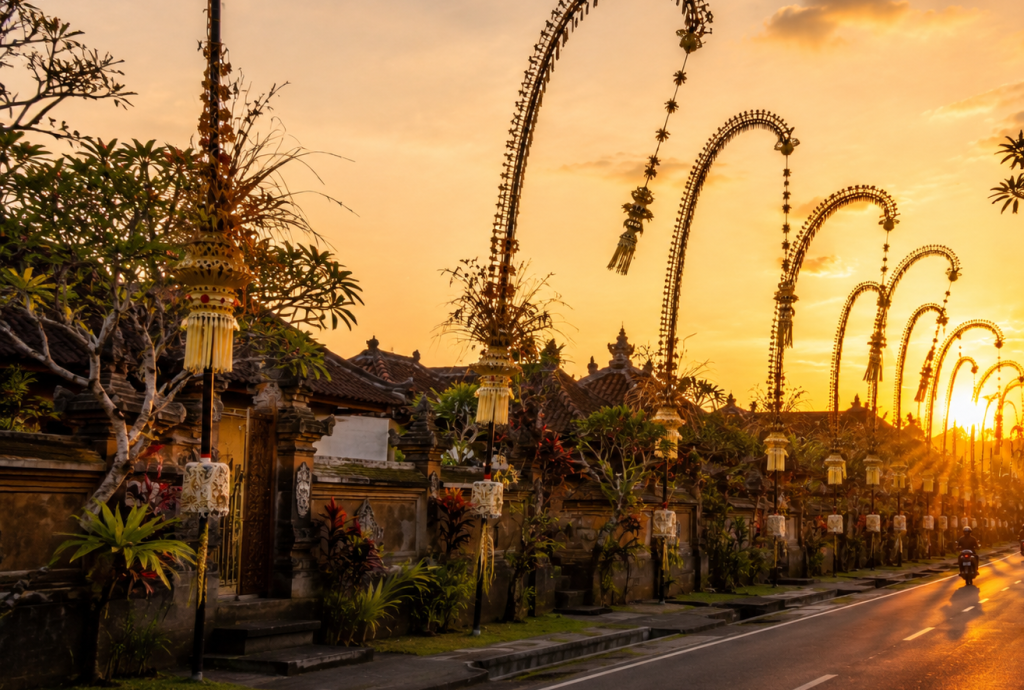
Stepping out onto the streets of Bali today, the immediate vibe is almost impossible to ignore. The familiar, straight asphalt roads that cut through your usual route have suddenly been transformed with majestic, arched tunnels made of curved bamboo poles fluttering in the warm breeze. These towering structures, known as penjor, signal that the 210-day Balinese calendar has once again completed its cycle. Although Galungan was observed twice last year in the year of 2025, the cycle only occurs once this year, which will happen in the 17th of June, 2026 and Kuningan consecutively occurring at the 27th of June, 2026. The island is actively shifting into one of its most visually stunning and spiritually intense seasons.
At its core, Galungan is much more than a localized holiday; it is the ultimate celebration of the triumph of Dharma (righteousness, balance, and universal good) over Adharma (unrighteousness, chaos, and evil). It marks a highly sacred period when the spiritual energy of the island reaches its absolute peak. For both the local Balinese and the international residents witnessing the island's metamorphosis, Galungan provides a profound reminder that beneath the modern development and bustling streets, Bali operates on a deeply ancient, unshakeable spiritual identity.
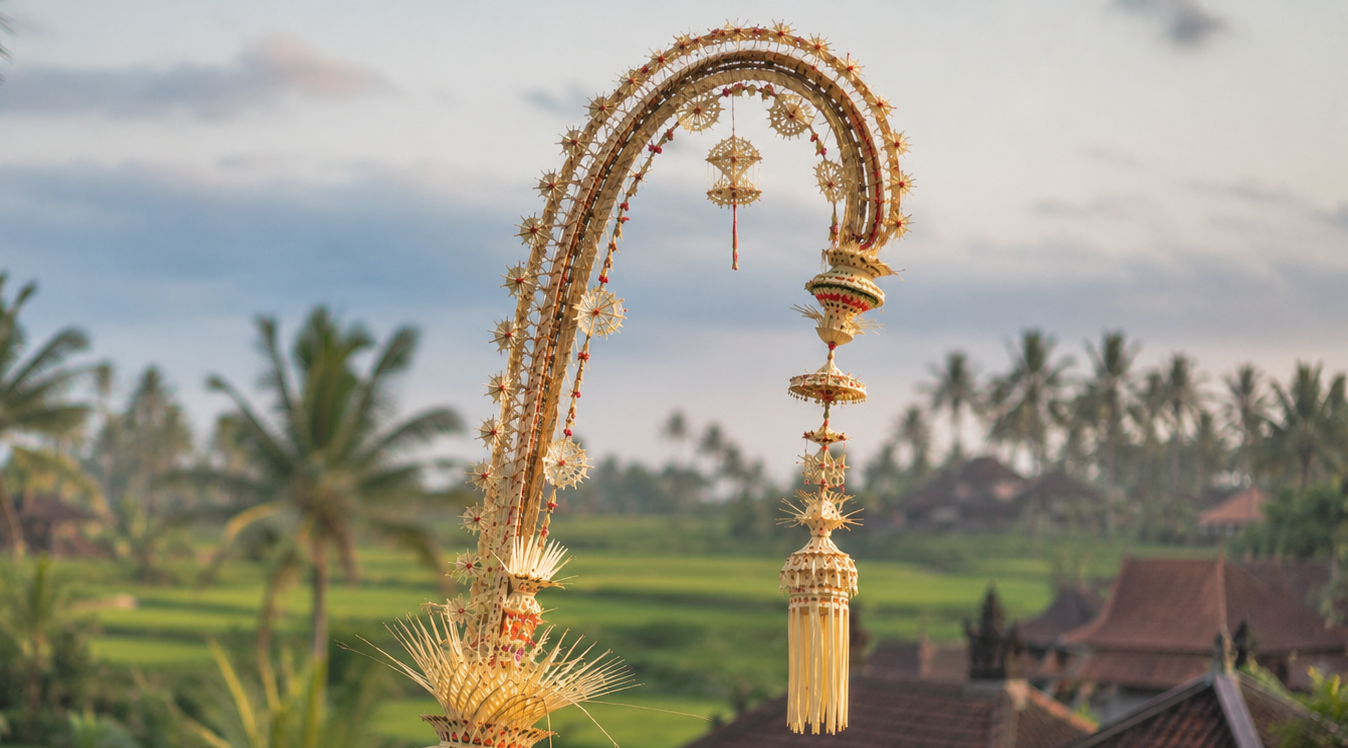
The Anatomy of a Penjor
To the untrained eye, a penjor might look like a highly creative, festive street ornament designed simply to beautify the neighborhood. In reality, it is a piece of sacred geometry and a highly symbolic religious offering. The distinctive, sweeping curve of the bamboo pole is deliberate; it represents the towering peak of Mount Agung, the sacred abode of the Balinese gods. Furthermore, the arching bamboo mimics the body of the mythical dragon Anantaboga, a revered symbol of earthly prosperity, fertility, and the foundation of the world.
Beyond the structural symbolism, the penjor serves as a massive, public display of gratitude. Every single pole is meticulously laden with the island's agricultural yields. Suspended from the bamboo, you will find fresh coconuts, stalks of bananas, golden sheaves of unhusked rice paddies, traditional tubers, and colorful ceremonial cakes. By hanging the literal fruits of the earth above the streets, the community actively thanks the gods for the island's fertile soil, abundant harvests, and the continued survival of their agricultural heritage.
Welcoming the Ancestors
While the penjor dominates the public visual landscape, the true heart of Galungan beats behind the high walls of the family compounds. Balinese Hindus believe that during this sacred celebration, the veil between the worlds thins, allowing the spirits of their ancestors to descend from the divine spiritual realm (Parahyangan) to visit their former earthly homes.
This creates a profoundly intimate atmosphere across the island. Families spend days, and often nights, meticulously preparing elaborate, tower-like offerings known as banten to welcome their ancestors at the family temples (pemerajan). These spirits are not treated as distant, abstract entities; they are welcomed back as esteemed, living guests returning home for a grand reunion. The scent of burning sandalwood incense fills the courtyards as families lay out fresh food, holy water, and vibrant flower petals, ensuring their returning forebears feel the unbroken love, respect, and devotion of the generations they left behind.
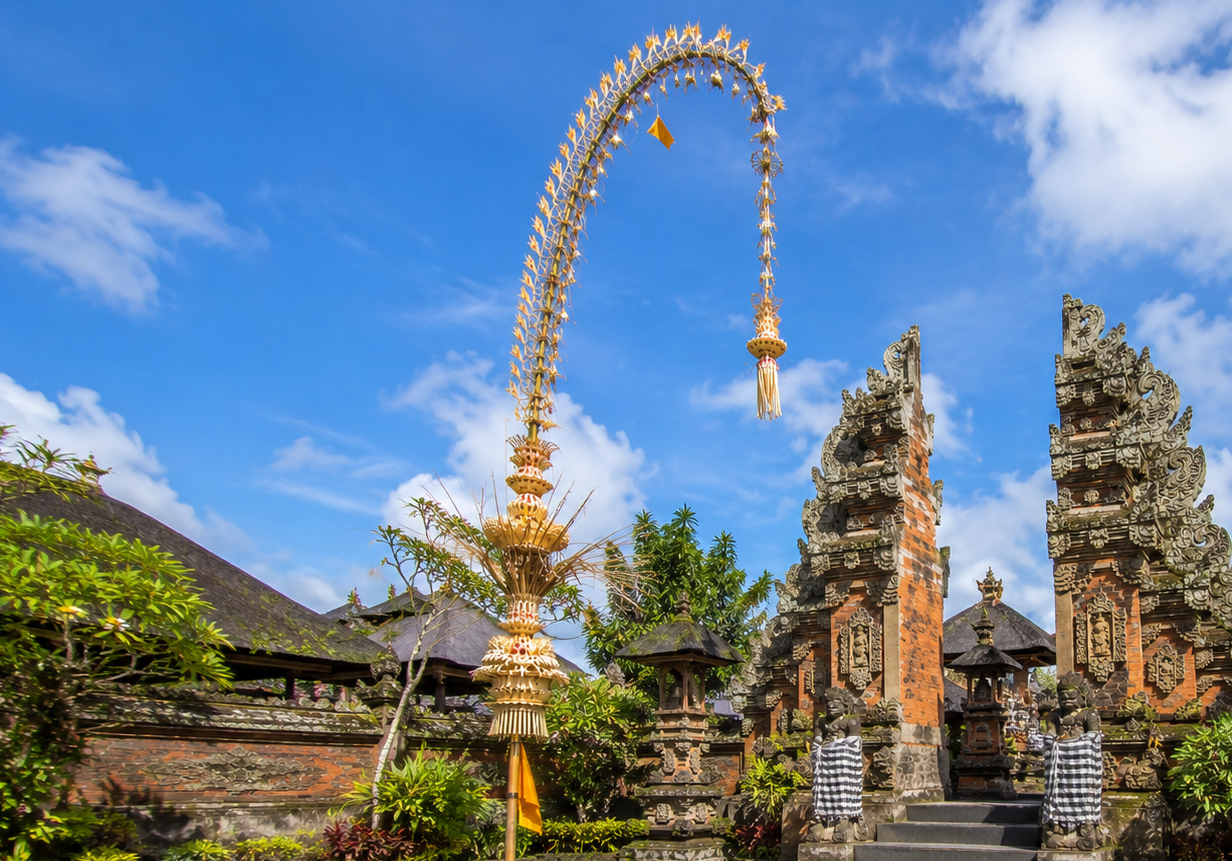
The Symphony of the Streets: Ngelawang and the Barong
Galungan is not just a visual spectacle; it is a full-sensory experience accompanied by a highly distinct, energetic soundtrack. During this period, the streets echo with the Ngelawang ritual, a mobile, dynamic street performance where troupes of enthusiastic village youths parade a Barong through the neighborhood. The Barong, a mythical, heavily ornamented lion-like creature, represents the ultimate protector spirit and the embodiment of Dharma.
The energetic crash of the traveling gamelan, the sharp strike of the ceng-ceng cymbals, and the pounding of the hand drums are not just for neighborhood entertainment. This aggressive, joyful noise serves a highly functional spiritual purpose. As the Barong dances from house to house, the performance is believed to actively bless the streets, physically banishing stagnant, negative energies. By filling the air with sacred sound and movement, the youth protect local households from any malevolent spirits attempting to cross over during this spiritually sensitive, thin-veil period.
Kuningan
The towering penjor will stand guard over the streets for quite some time, as Galungan is only the beginning of a prolonged spiritual window. The celebration season lasts for a full ten days, maintaining a heightened state of devotion across the island until it culminates in the closing ceremony of Kuningan.
Kuningan is the exact day the ancestors are believed to conclude their earthly visit and ascend back to their spiritual realm. Because religious doctrine states that the spirits leave by noon, the morning of Kuningan is marked by an intense, beautiful urgency. All major prayers and specific offerings must be completed before the sun hits its peak and the spiritual gateway closes. On this day, the offerings are distinctly characterized by nasi kuning (fragrant yellow rice). The vibrant yellow color is derived from turmeric and signifies ultimate prosperity, serving as a final, joyous expression of gratitude before the ancestors depart for another 210 days.
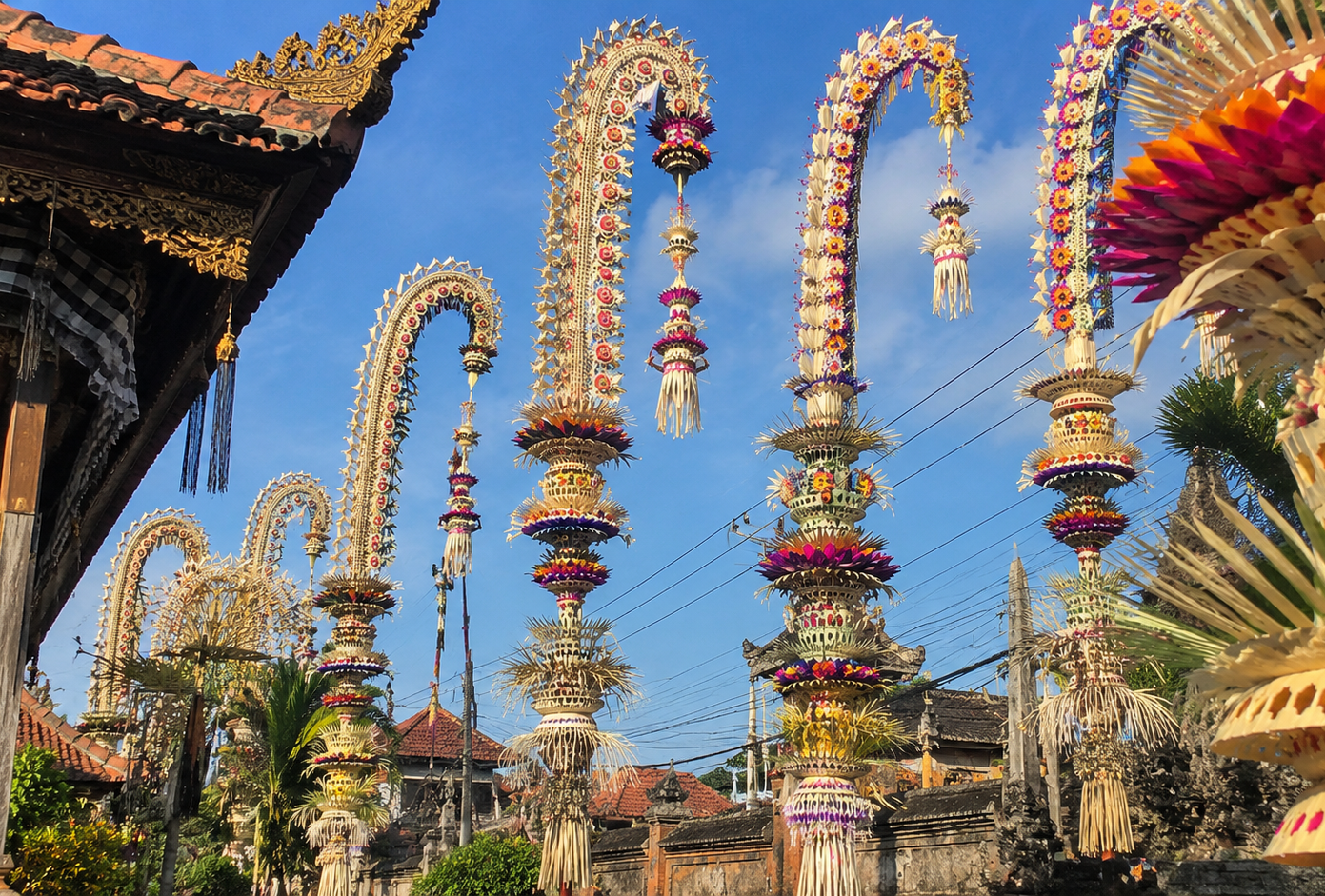
The Summit: The Great Penjor Battles
As the religious duties are fulfilled, the creation of the penjor transitions from a strict, somber religious obligation into an arena for fierce, exhilarating community pride. While the base elements and religious requirements of the offering are universally sacred, the physical execution is where the sekaa teruna (the village youth organizations) flex their architectural, engineering, and artistic muscles.
Across various banjars and districts, highly anticipated Lomba Penjor (penjor competitions) are held to crown the ultimate local artisans. The judging criteria for these contests are incredibly strict and demand absolute perfection. Judges evaluate the sheer, soaring height of the bamboo, the flawless, intricate weaving of the young yellow palm leaves (janur), and the stunning complexity of the hanging sampian (the decorative tail that catches the wind). Furthermore, top-tier competitions enforce a rigorous mandate: only pure, natural materials can be used. The inclusion of modern shortcuts like plastics, nylon strings, or metal staples results in immediate point deductions.
This competitive summit completely transforms the island's roads into a massive, world-class open-air art gallery. The winning banjars secure immense bragging rights for the entire 210-day cycle, proving to everyone who walks their streets that devotion in Bali is not entirely about quiet, silent prayer. It is just as much about loud, spectacular, and undeniably brilliant communal artistry.