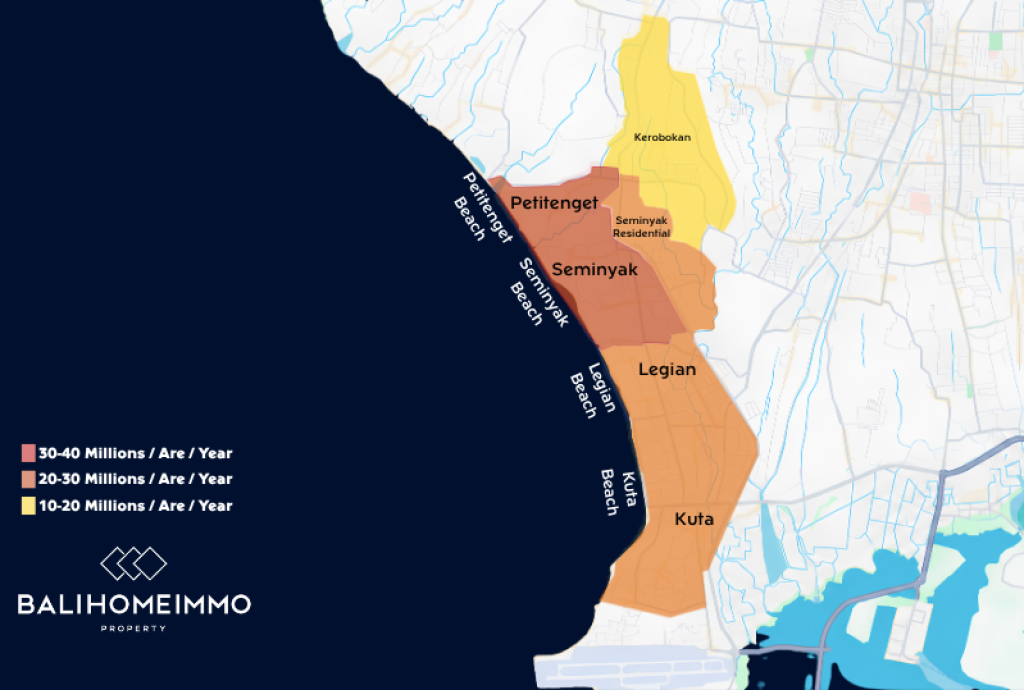






Pererenan has officially transitioned from a quiet neighbor of Canggu to one of Bali’s most attractive coastal markets. No longer treated as just a "spillover" area, it has carved out its own distinct beachside identity. For investors, Pererenan represents a refined west-coast atmosphere that successfully combines high-end lifestyle appeal with serious commercial interest.
The Area Attracts Buyers Looking for More Than Just Hype
Unlike the hyper-saturated corridors of central Canggu, Pererenan is significantly quieter while remaining perfectly connected to the wider lifestyle market. It appeals to a sophisticated guest profile, those who want immediate access to world-class surfing, sunset views, and trendy cafés, but prefer a slower, more intentional holiday rhythm. This balance explains why the area is currently seeing a surge in buyer interest.
Understanding the Pererenan Landscape
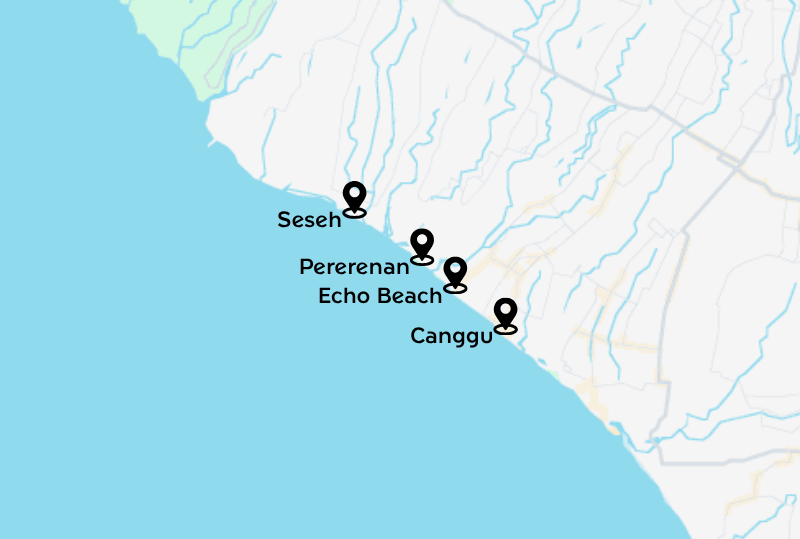
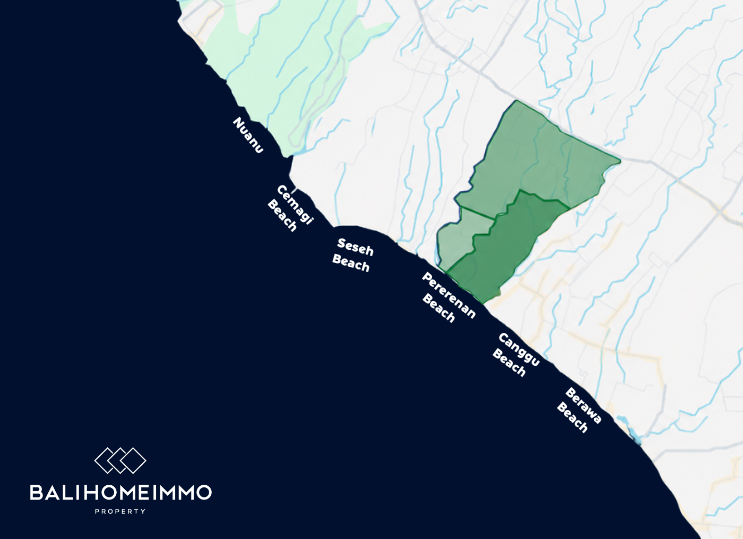
Understanding Pererenan’s value starts with its geography and scale, which define both its lifestyle appeal and investment positioning. Located in the Badung Regency on Bali’s southwest coast, Pererenan sits strategically between the energy of Canggu to the south and the quieter, more untouched village of Seseh to the north. It is approximately 15 kilometers from Denpasar and around a 45-minute drive from Ngurah Rai International Airport, making it both accessible and slightly removed from the island’s busiest zones.
At the heart of the area is Pererenan Beach, a striking stretch of volcanic black sand that shapes the identity of the village. One of its strongest lifestyle advantages is its proximity to Echo Beach, allowing residents and guests to reach the core of Canggu’s surf and dining scene in just a 10-minute walk along the shoreline. This creates a rare balance where you are close to the action, but not directly inside it.
What further distinguishes Pererenan is its “green belt” atmosphere. Unlike the dense development seen in neighboring districts, the area is defined by rolling rice terraces and protected zones that preserve open space. Even as development continues, this natural structure helps maintain the lush, breathable environment that originally drew people to Bali.
Despite being part of the wider Canggu region, which spans roughly 5.23 km², Pererenan operates more like a boutique enclave. Its layout is intentionally spread out, without a single congested center. Villas are typically tucked into quieter lanes, offering either direct beach access or uninterrupted rice field views, creating a sense of privacy while still remaining well connected to surrounding hotspots.
The Numbers Behind Pererenan Beach Side’s Rental Strength
To understand the investor shift toward Pererenan, one must look at the hard data. The market performance here is no longer based on potential; it is backed by measurable success.
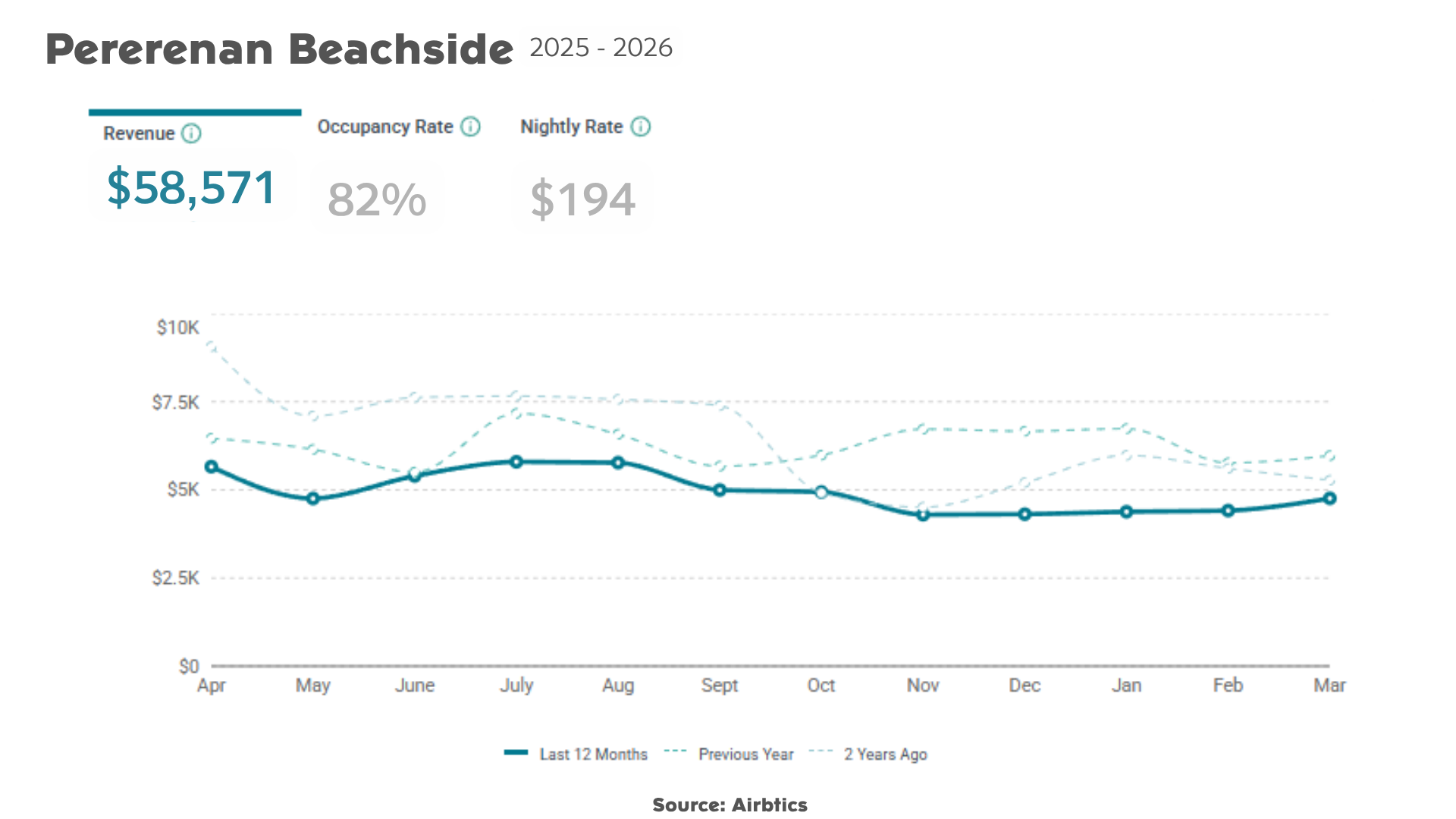
According to recent data from Airbtics, the numbers tell a compelling story of active demand:
-
Annual Revenue: Approximately $58,571 or IDR 998.765.800
-
Occupancy Rate: A robust 82%
-
Average Nightly Rate: $194 or IDR 3.340.000
What These Figures Mean for Your Investment:
An 82% Occupancy Rate
An occupancy rate of 82% is an exceptional benchmark in the global short-term rental market, where a 60-70% average is typically considered "healthy." In the context of Pererenan, this figure reveals a market that has decoupled from the traditional volatility of Bali’s tourist seasons.
-
Year-Round Magnetism: Unlike other regions that see sharp drops during the monsoon months or off-peak periods, Pererenan maintains a steady flow of guests. This suggests a high concentration of "lifestyle travelers" and digital nomads, profiles that stay longer and are less sensitive to seasonal weather changes than traditional holidaymakers.
-
Market Reliability: For an investor, 82% occupancy means the "vacancy risk" is significantly mitigated. It indicates that the supply of quality villas in Pererenan is still being outpaced by demand, allowing owners to maintain high booking volumes without having to resort to aggressive price-slashing during quieter months.

Anchoring the Premium Beachside Identity
A median nightly rate of $194 or IDR 3.340.000 serves as a definitive statement on Pererenan’s market positioning. This isn't just a "comfortable" price point; it is a premium one that places the area firmly above the budget-conscious traveler and into the upscale lifestyle bracket.
A high nightly rate provides a buffer against rising operational costs. When the base rate starts at nearly $200 or IDR 3.500.000, the margins for property management, maintenance, and marketing remain healthy, ensuring that the villa isn't just "busy," but actually profitable.
Revenue Above $58K: From "Lifestyle Hobby" to Institutional Asset
Perhaps the most significant metric is the annual revenue exceeding $58,000 or IDR 998.765.800. In many parts of the world, a rental property is seen as a way to "cover the mortgage." In Pererenan, these numbers transform the property into a high-yield investment asset that competes with traditional financial markets.
When a single-unit villa generates over $58K or IDR 998.765.800 in gross revenue, it moves the conversation away from "owning a slice of paradise" and toward commercial viability. This level of income supports a professional management structure, allowing the owner to remain truly "hands-off" while still realizing significant net gains.
High revenue directly impacts the resale value of a property. In 2026, astute buyers aren't just looking at the architecture; they are looking at the yield. A proven track record of $58K+ or IDR 998.765.800 annual revenue makes a villa far more "liquid" on the secondary market, as it provides a clear, data-backed ROI story for the next investor.
The Appeal of Pererenan Beach Side
Beach Access Without the Congestion
Pererenan offers the quintessential west-coast experience, black sand beauty and world-class surf, without the overwhelming density of nearby nightlife hubs. It is a more relaxed alternative for guests who prioritize sunset-oriented stays and a restorative atmosphere.
The Kind of Stay People Want to Book
Villas in this area are often designed to be more private and atmospheric. With high-end restaurants and boutiques nearby that don't overwhelm the natural setting, Pererenan is easily positioned as both stylish and restful, making it a magnet for couples, families, and high-net-worth digital nomads.
How Demand Shows Up in Pererenan
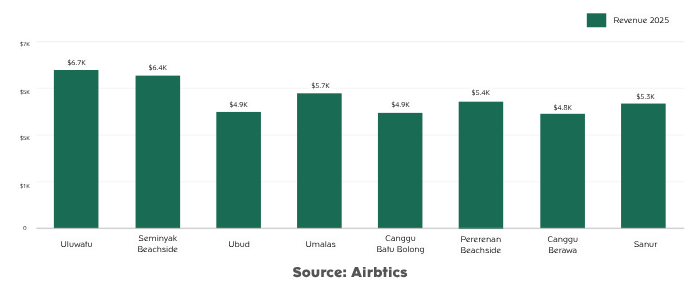
The strength of Pererenan is not just theoretical, it is clearly reflected in revenue performance across Bali’s key villa markets. According to the 2025 market data above, Pererenan Beach averages around $5.4K/month or IDR 87,500,000/month, placing it firmly within the upper tier of Bali’s rental landscape. It sits competitively alongside established zones like Umalas $5.7K/month or IDR 92,300,000/month and Seminyak Beachside $6.4K/month or IDR 103,700,000/month, while outperforming areas such as Ubud $4.9K/month or IDR 79,400,000/month and Berawa $4.8K/month or IDR 77,800,000/month.
This performance is directly tied to location psychology. Properties on the beachside of the main road consistently command stronger demand because they align with the guest’s primary booking trigger, walkability to the ocean. This is not just about convenience; it is about perceived lifestyle value, which translates directly into pricing power and occupancy stability.
In contrast, inland residential pockets, while more affordable, rely more heavily on design and pricing strategy to compete. Beachside positioning, whether in Pererenan or neighboring Seseh, simplifies the marketing narrative and strengthens both short-term rental appeal and long-term resale liquidity.
The “Soft Landing”
Pererenan’s real advantage lies in how it converts this demand into a balanced and resilient asset class. With monthly revenues averaging around $5.4K or IDR 87,500,000, the area demonstrates that it can sustain premium performance without the volatility seen in more saturated zones.
The market here supports a wide range of villa formats:
-
1-bedroom villas thrive on the area’s “quiet luxury” positioning, attracting couples and high-spending digital nomads seeking privacy and design.
-
Larger family villas benefit from group demand, where guests prioritize space, proximity to the beach, and a polished but relaxed environment.
This diversity in demand creates what can be described as a “soft landing” for investors, a market that is neither overly dependent on one guest type nor vulnerable to sharp seasonal swings. Instead, Pererenan delivers a steady blend of occupancy, rate strength, and broad appeal, positioning each property as a professional, income-generating asset rather than a speculative hold.
Pererenan by the Numbers
Beyond rental performance, the cost of securing a leasehold position in Pererenan is a key part of the investment equation. Current market data shows a clear pricing structure based on proximity to the beach, land size, and zoning characteristics.
In the prime beachside zones, leasehold land typically ranges between IDR 50.000.000 per are per year for street-front plots, positioning these as the most premium and visible assets. For parcels under 10 are, pricing generally sits between IDR 40.000.000-45.000.000 per are per year, while larger plots (above 10 are) can still be negotiated within the IDR 35.000.000-45.000.000 range, offering better value per square meter for larger-scale villa developments.
Moving slightly away from the immediate beachfront toward areas like Pantai Lima, pricing remains competitive but slightly more accessible. Here, leasehold land averages IDR 40.000.000-45.000.000 per are per year for smaller plots, and IDR 35.000.000-45.000.00 per are per year for larger land sizes, making it an attractive middle ground between prestige and scale, or profitability.